Democratic socialists are back in the spotlight after notching two high-profile mayoral primary victories in major cities this month.
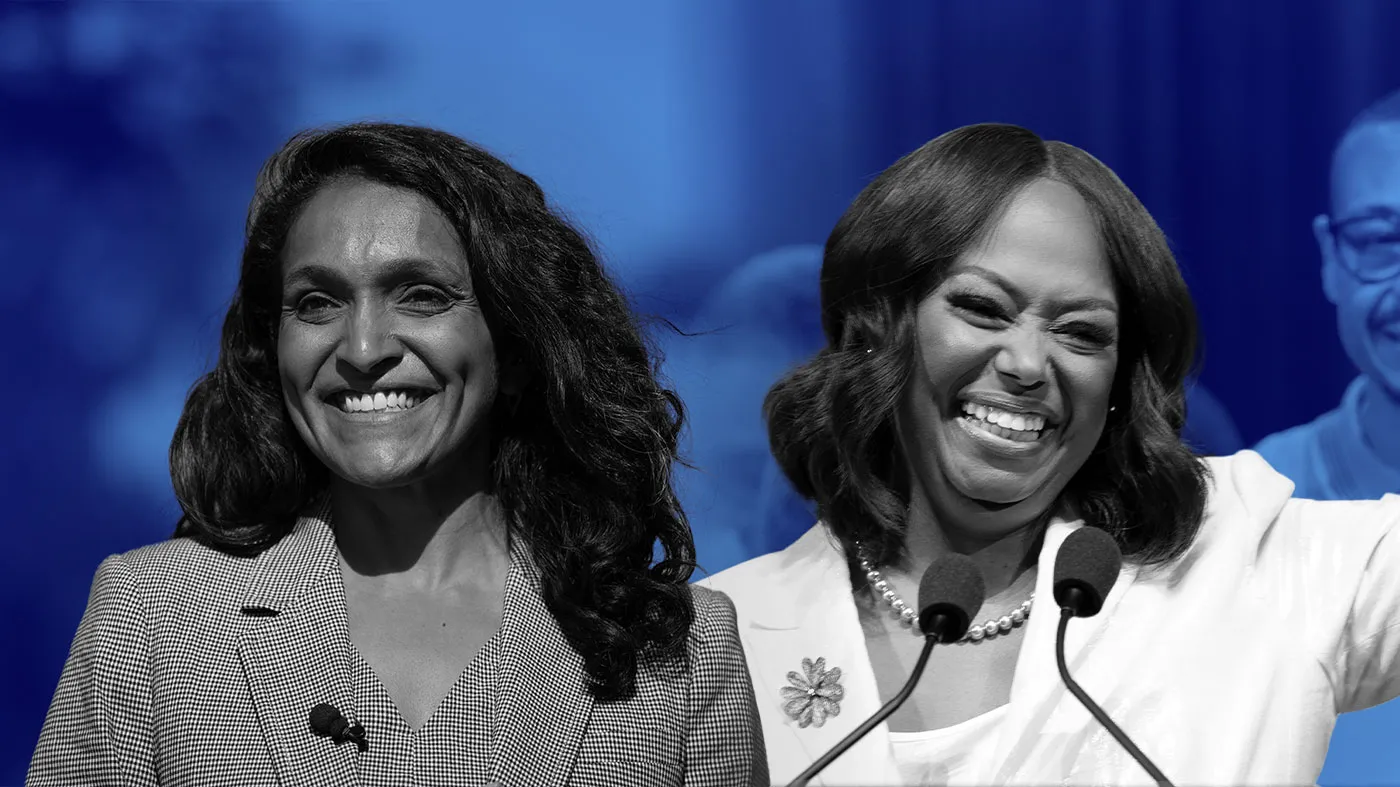
In Washington, D.C., this past week, progressive Democrat Janeese Lewis George outperformed moderate Kenyan McDuffie, all but assuring she’ll succeed Mayor Muriel Bowser.
The week before in Los Angeles, fellow Democratic Socialists of America (DSA) member Nithya Raman advanced to a November runoff in the mayoral race against incumbent Mayor Karen Bass (D).
Their successes follow the most prominent DSA election victory in recent history: New York City Mayor Zohran Mamdani last summer defeated establishment Democrat Andrew Cuomo for the party’s nomination before again defeating the former New York governor, who reentered the general election as an independent.
While some see the results as a sign that DSA candidates and ideas are gaining traction in the Democratic Party, others caution against drawing broader ideological conclusions, saying the races reflect voters’ desire for change as the 2026 midterms and 2028 presidential election loom.
“There are some lessons that can be learned from the election results in New York and Washington, but I think that there are limits to how much this will tell you about voting in the rest of the country,” veteran political strategist Doug Sosnik, former senior adviser to then-President Clinton, told The Hill.
“What happened in those two cities that does apply is that voters want change,” he continued. “They are tired of the same old politicians defending the status quo. Voters want people to blow up the system.”
Sosnik said he thinks the recent DSA wins are a validation of the economic populist policies championed by some of those candidates, but he noted the same trend is true for the Republican Party, pointing to President Trump’s election in 2016 and 2024.
“People not only want change, but they also want their elected officials to focus on the middle class and break up a system that currently favors the rich and powerful,” Sosnick said. “That has been a consistent pattern throughout the primaries so far.”
Mamdani won his office last year with a bold vision for affordability in the country’s financial center, proposing rent freezes, city-owned grocery stores, universal childcare and free city buses. Though some criticized his goals as unfeasible, the 34-year-old’s promises of a “new era” in New York City propelled him to victory as a political newcomer.
In Los Angeles, Raman shook up the mayor’s race with a last-minute bid, pledging to buck the status quo with progressive approaches to homelessness and housing costs. She faces an uphill climb to oust Bass this fall, but she surged past Republican Spencer Pratt in the primary earlier this month.
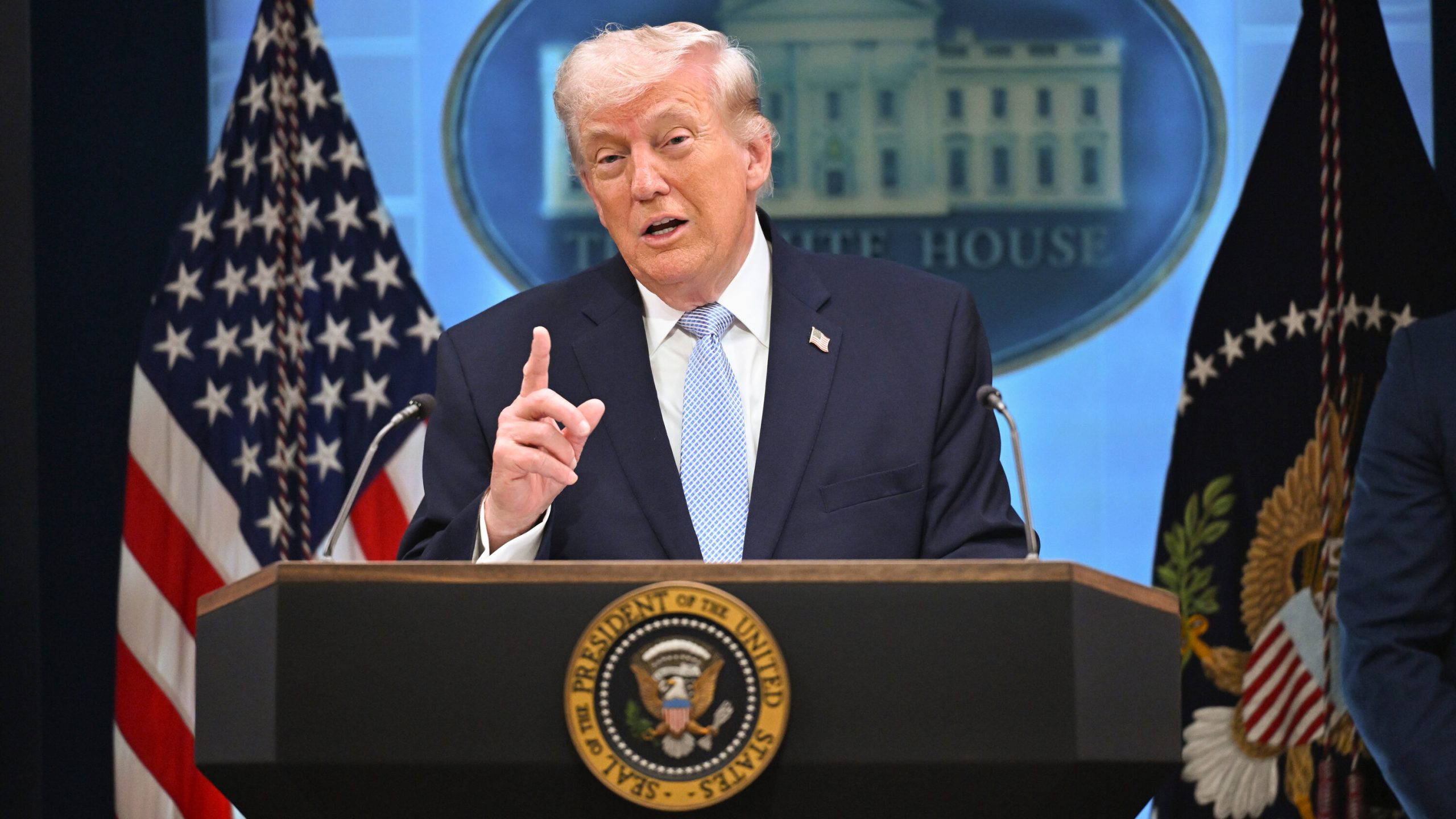
And after winning D.C.’s primary on Tuesday, Lewis George is now on track to easily take the mayor’s office this fall, leading the nation’s capital through the rest of Trump’s second term. As she pitches a progressive platform and an aggressive resistance to federal overreach, Trump has warned that the government could “take back” D.C. if a “crazy socialist” is ultimately elected.
Jim Kessler, executive vice president for policy at the center-left think tank Third Way, said Lewis George was “definitely the change candidate” in D.C.’s mayoral race, where voters were looking for something different after 12 years under Bowser.
“So, in cities, you’re seeing trends that are going in both directions. Statewide, with a handful of exceptions, the moderate Democrats have done well,” Kessler added, pointing to recent primary victories of Democrats James Talarico in Texas, Josh Turek in Iowa, Roy Cooper in North Carolina, and to former Rep. Mary Peltola’s (D) popularity in Alaska ahead of the U.S. Senate primary this summer.
He noted, however, that other cities — like San Francisco, where moderate Daniel Lurie prevailed in the city’s 2024 mayoral race — have held primaries in recent years where more progressive mayors were unseated by moderates promising to bring change.
Democratic strategist Antjuan Seawright argued it’s “more of a generational conversation we’re having in these primaries” rather than a surge of interest in DSA contenders.
Seawright said he’s “shocked” by people assessing the mayoral successes and trying “to look up under the hood and use this as some sort of measure, if you will, of all aspects of Democratic politics or national politics.”
“I think these things are isolated to a large degree,” the Democratic strategist said.
New York-based Democratic strategist Jon Reinish argued that “the people who actively want to elect a DSA member, a socialist specifically, is a subset of a subset of a subset of people, even in the Democratic Party,” even as candidates like Mamdani and Lewis George see wins.
“It’s more the policy, it’s more the energy, and it is more the desire to overthrow business as usual,” Reinish said, noting that even some reliably blue voters still appear unaware of the DSA movement’s specifics. “If it happens to be a DSA or DSA-affiliated person who is going to make a case against the establishment, that person has a better chance of catching fire.”
The DSA, the largest socialist organization in the country, has grown its political machine to more than 100,000 members. After surfacing in the 1980s as a left-wing advocacy group, independent Sen. Bernie Sanders (Vt.) thrust the group into mainstream politics when he ran for president in 2016. While he was not a DSA member, Sanders identified as a “democratic socialist.”
In 2018, the DSA’s New York chapter endorsed Rep. Alexandria Ocasio-Cortez (D-N.Y.) in her challenge against then-Rep. Joe Crowley (D-N.Y.), and the movement’s political power has continued to grow through wins by Mamdani and others this cycle.
DSA Co-Chair Megan Romer said she sees the candidates’ recent successes as a testament to the growing democratic socialist movement, noting the group has more door-knockers and volunteers to reach out to prospective voters.
But, like some other strategists, she said the results also show voters “are tired of the status quo” and frustrated with stagnant wages, rising prices and “right-wing movements being exclusionary and divisive and negative.”
Romer disagreed, however, that the solution for Democrats is moving to the center. She argued former Vice President Kamala Harris’s mistake in her 2024 presidential campaign was moving to the center on issues like immigration, transgender rights and Gaza.
Romer said she thinks voters are also gravitating toward authenticity, which is how she explains the successful campaigns of New Jersey Gov. Mikie Sherrill and Virginia Gov. Abigail Spanberger — Democrats who ran as moderates last year with a clear cost-of-living message.
“I don’t see either of them as being anywhere sort of near or close to our politics, but I do see them both as being relatively unapologetic about the politics they have,” Romer said.
“People are drawn to authenticity, in an era where so little is authentic, and so people who really are walking the walk and talking the talk are appealing. … Zohran Mamdani is a very different type of candidate than Janeese Lewis George, but they’re both very authentic.”
Polling underscores voter frustration with the status quo and the party brand after Democrats’ bruising 2024 losses.
Decision Desk HQ’s polling aggregates of party favorability show Democrats are still 11 points underwater — though the score has improved some since the beginning of the year — while Republicans are roughly 14 points underwater.
But experts caution against interpreting the numbers as evidence of a base-wide shift to the left.
Kessler said he thinks it’s a “real concern” that national Democrats will take the wrong lesson from DSA candidates’ recent victories and think the results reflect “a sizable shift to the left.”
“If they take that lesson, they’re doomed,” he said.
Kessler noted that Democrats, in general elections, need to win 60 percent of the moderate vote, arguing it would be a mistake to think candidates that win in cities can win nationwide.
“There’s all sorts of enticements for a Democratic candidate to move to the left,” Kessler said, noting it can be easier to attract media attention and raise money from the left-leaning wing of the party, which is generally more politically engaged. But, he cautioned, “that Democrat cannot win a general election.”
“And let’s be honest, presidential elections aren’t won in the cities. They’re won in the suburbs,” Kessler said. “So, if you think you’re going to win a general election because you did great in Atlanta, you’ve got the wrong theory of the case.”