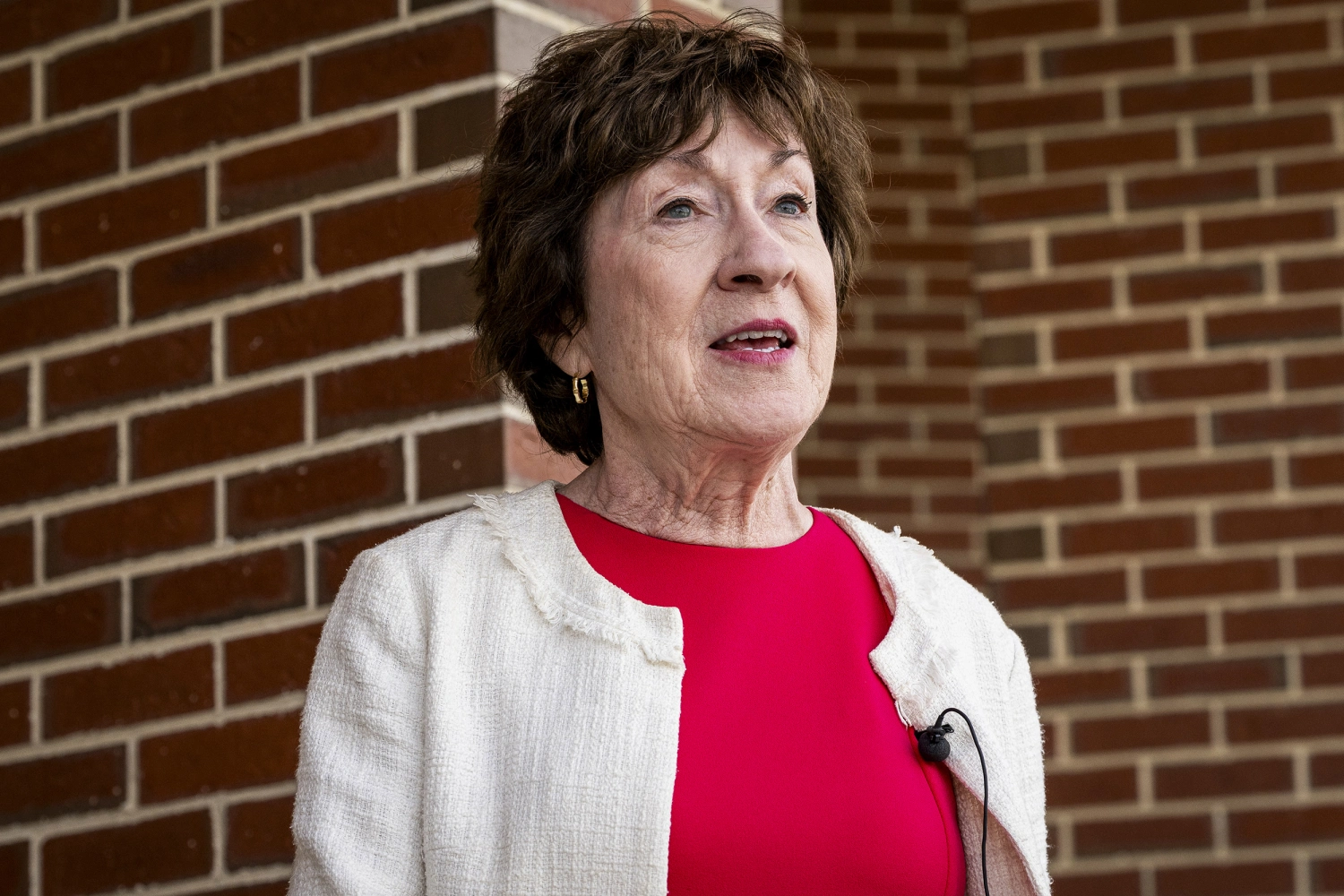
Sen. Susan Collins, R-Maine, this week revealed a nervous system condition that she said she has had for decades but is not considered dangerous or an impairment to doing her job.
Collins, who at times has visible trembling in her hands and head, told NBC affiliate WCSH in Maine on Wednesday that she has had “an extremely common condition that is called a benign essential tremor” throughout her nearly 30 years in Congress.
“I have had it for the entire time that I have served in the United States Senate,” said Collins, who has represented Maine since 1997. “It has absolutely no impact on my ability to do my job or how I feel each day.”
Collins, 73, added that the tremor is “inconvenient at times, but that’s all.”
Benign essential tremor can happen at any age, but it is most common in people over 40, according to the Mayo Clinic. The tremor can worsen over time, but it’s not life-threatening and doesn’t cause other health problems.
“If you talk to anybody in Washington, they will tell you that I am the hardest-working person that they have ever worked with, and the fact is I’ve never missed a single vote in all the time that I’ve been honored to represent the people of Maine,” Collins told WCSH. “I think that’s pretty good evidence of the fact that I am blessed with great health.”
Collins’ office said in a January news release that she has never missed a vote as senator, boasting a streak of nearly 10,000 consecutive votes that her office said was the second-longest in Senate history.
She is seeking a sixth term in the Senate and is expected to face Democrat Graham Platner, 41, in the fall after Gov. Janet Mills, 78, dropped out of the Democratic primary last week.
Platner, a combat veteran, talked about his health in an interview with WCSH in October.
“I have a couple herniated discs. My shoulder’s a wreck. My knees bother me. The VA gives me physical therapy for those things. I was also diagnosed with PTSD,” said Platner, who has a 100% disability rating from the Veterans Administration.
He told WCSH in November that his disability rating would not affect his ability to serve as a senator.
The general election is expected to be one of the most contentious during this year’s midterms. Collins last won re-election in 2020 won with 51% of the vote, beating her Democratic opponent by nearly 9 percentage points.