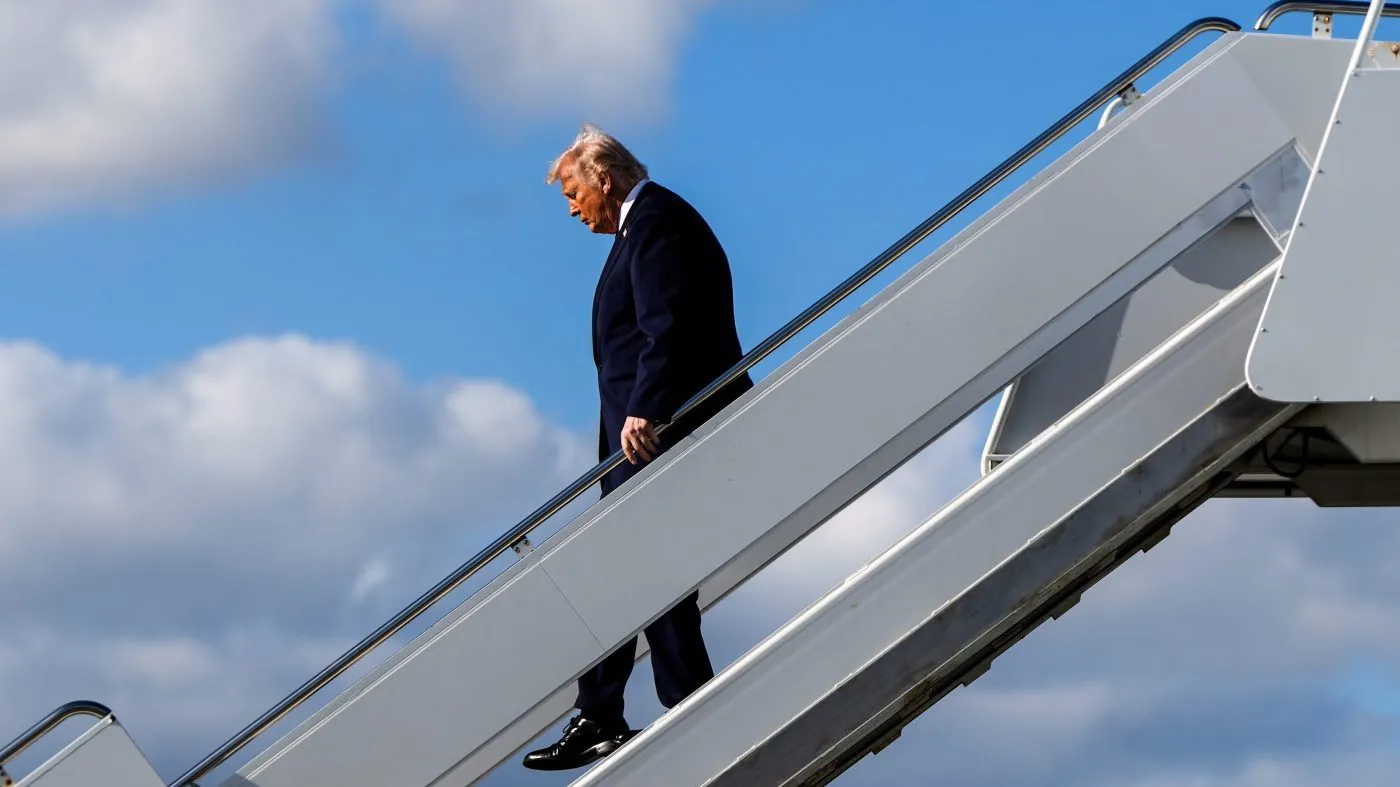
President Trump will come face-to-face with European allies this week at the World Economic Forum in Davos, Switzerland, as tensions build on both sides of the Atlantic over Trump’s insistence on the U.S. acquiring Greenland.
On Saturday, the president slapped 10 percent tariffs on Denmark and its European allies to pressure them over the future of Greenland. Overnight, the president criticized the U.K. and shared a screenshot of a text conversation with French President Emmanuel Macron in which he voiced his discontent with Trump on the issue.
The high-stakes meetings in Switzerland could play a significant role in determining the future of Washington’s involvement in the Danish territory.
U.K. Prime Minister Keir Starmer, who has led the country’s charm offensive on Trump during his second term, issued a rare criticism of Trump’s rhetoric on Greenland on Monday.
“Any decision about the future status of Greenland belongs to the people of Greenland and the kingdom of Denmark alone,” Starmer said at a news conference.
Meanwhile, Macron appeared to take a veiled jab at Trump during his address on stage at Davos, telling the audience, “conflict has been normalized.” The French leader said the “endless accumulation of new tariffs” is “fundamentally unacceptable”
“Even more so when they are used as leverage against territorial sovereignty,” he added.
Mick Mulvaney, who served as Trump’s chief of staff during his first administration, warned that Trump’s actions on Greenland are leading to a growingly isolated U.S.
“In the first term, Trump was very clear to say ‘America First’ was not ‘America Alone.’ You get the impression that is changing in the second term,” Mulvaney said.
Former U.S. Ambassador to Denmark Alan Leventhal, who served in the Biden administration, said the announced U.S. tariffs have only “unified” the European Union.
“We should expect the EU countries to stand up to the threats of higher tariffs,” Leventhal said.
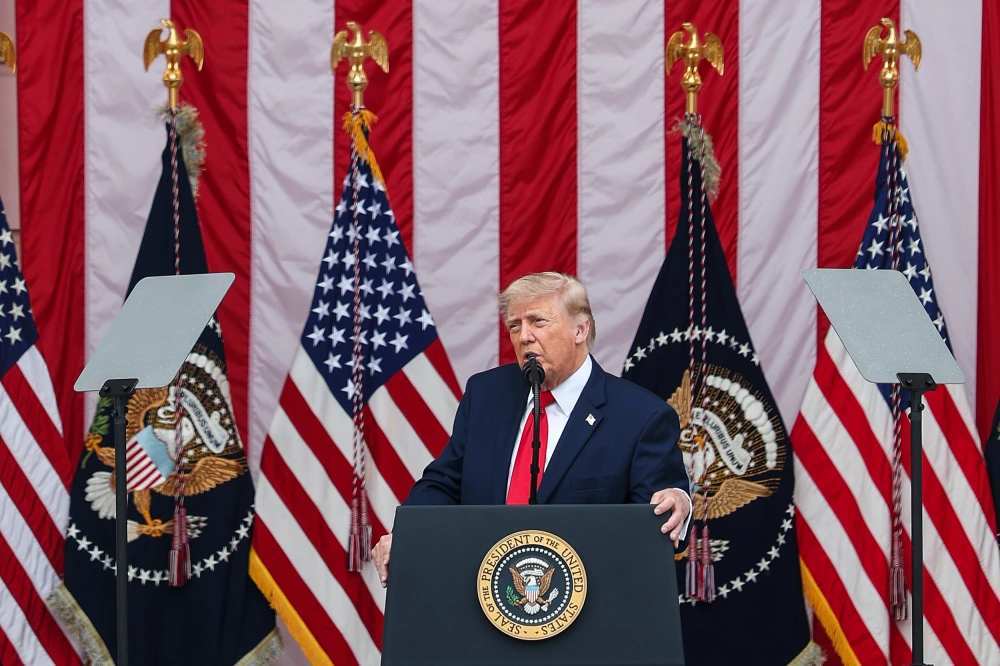
In response to a question by The Hill during a briefing marking his first year in office, Trump said he still has a good relationship with Starmer and Macron, saying they get along “very well.”
“They get a little bit rough when they’re, you know, when I’m not around, but when I’m around they treat me very nicely,” Trump said.
However, when asked during the briefing whether he would attend the G7 meeting in Paris that Macron proposed to him over text, Trump said he would not.
“No, I wouldn’t do that,” the president said. “Because you know, Emmanuel’s not going to be there for very long, and there’s not longevity there. He’s a friend of mine. He’s a nice guy.”
Macron’s term as president of France ends in 2027, and he is term limited.
Trump and his allies have repeatedly argued Washington controlling Greenland would bolster U.S. national security amid concerns Russia and China are growing their influence in the Arctic.
“It matters to us because it matters to China and Russia,” said Nathan Sales, who served as the coordinator for counterterrorism and special envoy to the Global Coalition to Defeat ISIS during the first Trump administration.
“China and Russia, long-term, will have an interest in exercising interest over Greenland, and that is not in the interest of the United States,” he added.
Russian Foreign Minister Sergey Lavrov dubbed the debate over Greenland “a deep crisis” for NATO and its members.
“It was hard to imagine before that such a thing could happen,” Lavrov said at a press conference Tuesday, arguing it could lead to an event in which “one NATO member is going to attack another NATO member.”
Mulvaney warned that a weakened NATO could be an unintended consequence of the deepening rift between Washington and its allies.
“The Trump administration has got to figure out not only what the benefits are to acquiring Greenland but what the costs are to acquiring Greenland, and that’s more than just money,” he said.
“If you ask me, ‘Is the NATO alliance at risk?’ Six months ago, I would have said no,” he continued. “Now, I think it’s different.”
Trump predicted Tuesday that both sides of the Atlantic would be happy with an eventual agreement for the U.S. to take over the Danish territory.
“I think we’re going to work something out where NATO’s going to be very happy, and we’re going to be very happy. But we need it for security purposes,” the president told reporters.
Sales noted the diplomatic route as opposed to threatening other countries is one the Trump administration could take.
“As important as Greenland is to the United States and our national security, we can get what we need more effectively by negotiating with our allies than by saber-rattling,” he said.
“This is where the question of ends and means comes in,” Sales continued. “While we certainly have a strong interest in Greenland being firmly in the American camp, the means we use to bring that about matter, because Russia’s long goal going back to the Cold War has been to divide the transatlantic alliance.”
“They failed to do it during the Cold War, but they haven’t given up trying,” he added.
Trump notably has not ruled out military force to acquire Greenland, but the White House has said diplomacy was always the first option.
European nations have very noticeably taken note of the rhetoric. Troops from multiple countries arrived in Greenland last week, including from France, Sweden and Denmark.
“The idea that the U.S. would attack the territory of one of our closest allies is beyond what anyone could have imagined before this administration,” Leventhal said.
“Whatever comes out of President Trump’s visit to Davos, it does not change the massive consequences to our worldwide relationships if military action is taken in Greenland,” he continued.
When asked at the briefing Tuesday how far he was willing to go to acquire Greenland, Trump responded “you’ll find out.”