(NewsNation) — For the second time in President Donald Trump’s second term, a centuries-old constitutional tug of war is in the spotlight.
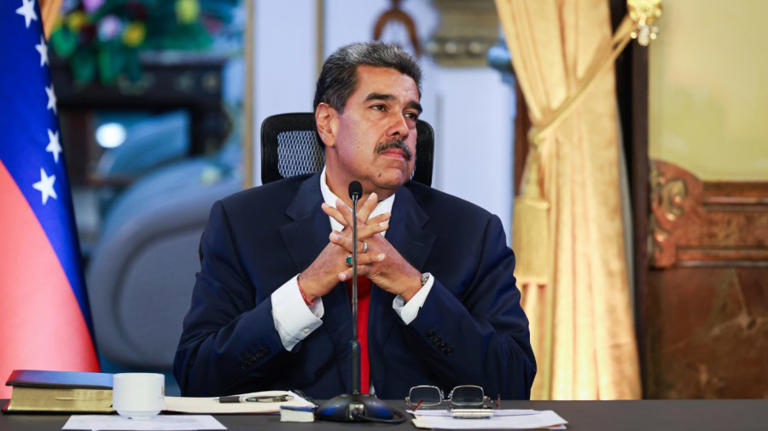
The operation to oust Venezuelan President Nicolás Maduro is sure to have politicians bringing up Congress’s sole authority to declare war, while others will point to the president’s role as commander in chief.
Reactions are still coming in as Congress members wake up Saturday, but so far, they’ve mostly come along party lines: Democrats say the president overstepped, while Republicans say he took steps to defend Americans from an imminent threat.
What does the Constitution say about war powers?
Article 1, Section 8, of the Constitution says, “Congress shall have power to … declare War, grant Letters of Marque and Reprisal, and make Rules concerning Captures on Land and Water.”
Meanwhile, Article 2, Section 2, states, “The President shall be Commander in Chief of the Army and Navy of the United States, and of the Militia of the several States, when called into the actual Service of the United States.”
Those two sections have some conflict, and over the years, court rulings and other precedents have smoothed some of them out. Congress’s own website acknowledges the schism in interpretation:
Under Congress’s interpretation of the Constitution, the President may introduce troops into hostile circumstances if Congress has (1) declared war, (2) specifically authorized the President to use force, or (3) there is a national emergency created by an attack on the United States or its territories. The executive branch claims much broader authority and asserts that the Constitution empowers the President to initiate and engage in many types of military action without congressional authorization.
Has the US gone to war without congressional approval?
Technically, no. The last formal declaration of war was World War II. However, major conflicts in Korea, Vietnam and Iraq came with congressional authorization, though Iraq’s authorization was clearer than the one for Vietnam.
Other military actions, like the strike on Iran’s nuclear facilities or the killing of Osama bin Laden, were done without congressional approval. In 2011, President Barack Obama justified the action in Pakistan, a country the U.S. had no formal hostility with, as a direct response to the 9/11 attacks.
In 2025, Trump struck Iranian nuclear facilities because he said they were coming close to producing a nuclear weapon, threatening the U.S.
Was the arrest of Maduro legal?
This may never be determined in a court, and the answer may depend on who you ask and whether they believe Maduro posed an imminent threat to the U.S.
Sen. Mike Lee (R-Utah) appeared to go from skepticism to agreement Saturday morning.
Just before 2:30 a.m. EST, as social media videos of the strikes started to spread, Lee posted, “I look forward to learning what, if anything, might constitutionally justify this action in the absence of a declaration of war or authorization for the use of military force.”
But two hours later, after a call from Secretary of State Marco Rubio, Lee changed his tune.
He posted that Rubio told him, “The kinetic action we saw tonight was deployed to protect and defend those executing the arrest warrant. This action likely falls within the president’s inherent authority under Article II of the Constitution to protect U.S. personnel from an actual or imminent attack.”
Vice President Vance posted on X that the U.S. was justified because of Maduro’s arrest warrant.
“Maduro has multiple indictments in the United States for narcoterrorism,” Vance wrote. “You don’t get to avoid justice for drug trafficking in the United States because you live in a palace in Caracas.”
Rep. Seth Moulton (D-Mass.) said Trump overstepped his authority.
“Congress did not authorize this war,” Moulton, who served four tours in Iraq, posted. “Venezuela posed no imminent threat to the United States. This is reckless, elective regime change risking American lives (Iraq 2.0) with no plan for the day after. Wars cost more than trophies.”
When presented with critics’ arguments in a Saturday morning interview on Fox News, Trump said, “These are weak, stupid people.”