The most elusive mystery of the days surrounding the Jan. 6, 2021, Capitol attack has for years been the two pipe bombs planted outside the Democratic and Republican National Committee offices on the eve of the riot.
Clues emerged, like the suspect’s height and the distinctive Nike shoes he wore, but pressure mounted on the FBI as nearly five years passed with no arrests — until the end of last week.
Brian Cole Jr., 30, was arrested Thursday and faces two charges tied to the bombs. He’s the first suspect publicly identified by law enforcement.
As investigators reveal new evidence and the Justice Department prepares for prosecution, the mystery has started to unfurl.
“Jan. 6 was a day where people from all over the country were present in D.C.,” said Rizwan Qureshi, a former federal prosecutor with the U.S. attorney’s office for the District of Columbia. “So you had conceivably thousands of potential suspects.”
While the Trump administration crowed about catching Cole, they had few details to offer about what pushed him to place the pipe bombs outside of each office and the extent to which his actions tied in with other Jan. 6 activities.
Their press conference was largely devoted to stressing that they got no new tips or leads in the case, and they accused the Biden administration of failing to commit to solving the crime.
Charging documents and details shared by officials suggest the FBI was able to track Cole down by analyzing sales records of parts for each component used to make the bomb, as well as analyzing cell tower data.
“It is a bit weird that we are arresting this guy so late,” Qureshi said. “But gathering evidence from retailers, the manufacturer of the different components of the pipe bomb … it’s not easy.”
U.S. Attorney Jeanine Pirro said there were 233,000 end caps sold like those used in the bomb allegedly made by Cole. He purchased 12 black end caps and two galvanized end caps from four different Home Depot stores in Northern Virginia from October 2019 to November 2020, the complaint says, in addition to various other items.
“I want you to think about the fact that the FBI had to go through the sale of every one of them to try to find commonality with an individual, along with the purchase of the pipe itself, the cap ends, the wires, the steel and the 9-volt batteries — every one of those had to be mined and remined to the point where we were able to then connect [it to an individual],” Pirro said.
What evidence has been shared publicly is largely circumstantial, making it more critical for the government to pin down Cole’s motive.
“The complaint does not describe the defendant’s motive or include direct evidence of his intent in planting the bombs,” said Alexis Loeb, a former deputy chief of the Justice Department’s Capitol Siege Section. “While a complaint often does not include all the evidence the government has on hand, I would expect to see this aspect of the case feature more prominently at any trial.”
Qureshi, who is now a defense attorney, said that a good defense lawyer would argue there are “completely innocent, peaceful reasons” for Cole’s purchases.
“Because it’s, I don’t know, fertilizer for his lawn? Or why would he buy components of a pipe bomb three years prior to planting?” the former prosecutor posited. “Things like that, to put doubt in the jury’s mind.”
Qureshi added that investigators have not indicated there is any DNA evidence linking Cole to the pipe bomb — something that likely would have featured prominently in the charging documents if they had it.
At this stage, Cole appears to have been largely cooperative with investigators.
NBC News first reported that Cole told the FBI he believed conspiracy theories about the 2020 election, and other reports indicate he confessed in an interview to planting the bombs.
But that could shift now that he has an attorney.
Daniel Brunner, a retired FBI special agent, noted some associates of Cole’s called into question his mental fitness, an avenue he said a defense attorney could use to try to toss his statements, stressing that the bureau would still need to gather as much physical evidence as possible to bolster the case.
“Even if they have literally the individual saying, ‘Yes, I placed the bombs there,’ that does not stop the collection of physical evidence … because anything can happen between here and [the] court date,” he told The Hill.
“There’s a lot still to be uncovered. There’s a lot still to be unpacked on this one. This is just starting. This is just the next phase of the investigation,” Brunner said.
Qureshi said Cole’s lawyer will likely probe the context and reliability of any confession to determine whether it was achieved under duress. But if there aren’t signs of foul play, Cole will be faced with a choice.
“Him and his counsel will now have to make a judgment in light of his acceptance of responsibility — what additional information he wants to share,” Qureshi said. “Because now that he’s confessed, the government is in a position to present him with a plea offer, to handle this or resolve this in advance of trial, and usually those plea offers are more generous in this preindictment phase.”
The government’s case could be further complicated by the years that have gone by since the pipe bombs were placed. Witnesses’ memories may have faded, electronic communications may have been deleted and physical evidence may have been disposed of since Jan. 5, 2021.
However, arrests open up new avenues for investigators.
When searching a suspect’s home, law enforcement can look for written material, examine cellphones or come upon new leads, Loeb said. It’s also possible that people who weren’t initially suspicious of a defendant could come to understand they have relevant information and decide to share it with investigators.
“It’s generally seen as tougher, though certainly not impossible, to put together cases after several years have passed,” Loeb said.
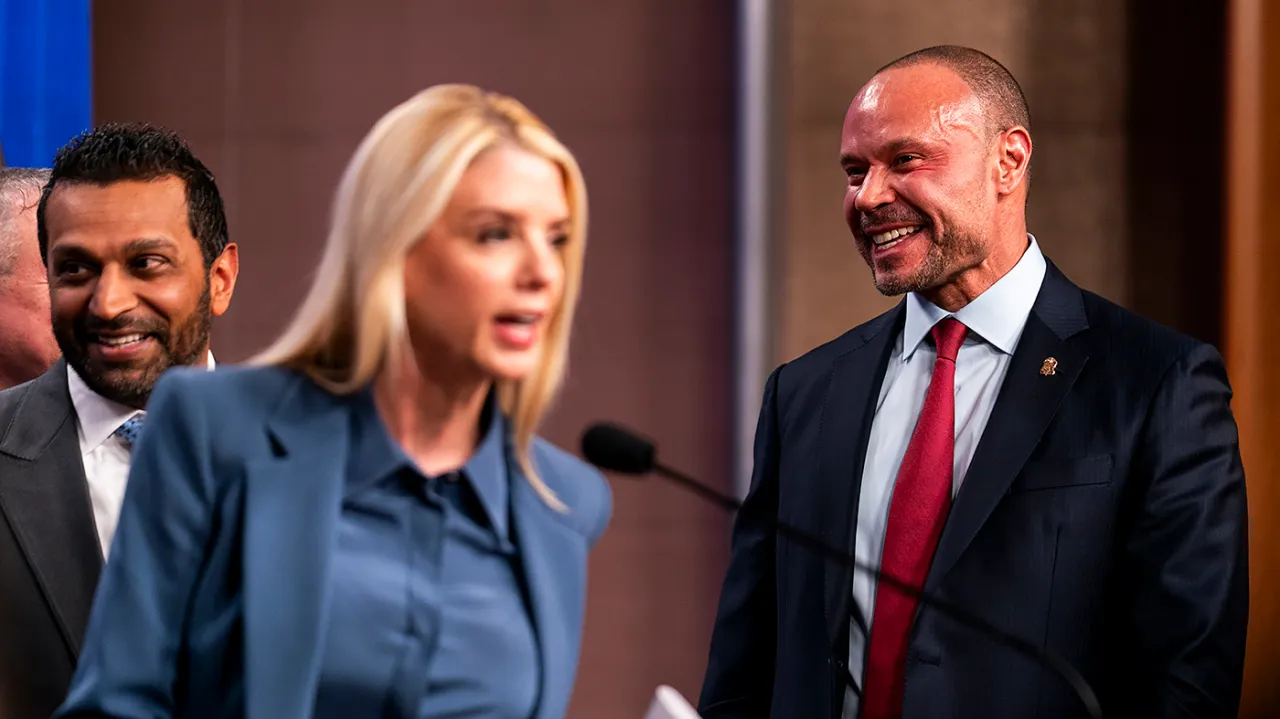
The scrutiny over the case was in many ways amplified by those now tapped to lead the FBI, including Deputy Director Dan Bongino, who previously suggested the lack of action in the case was due to a “massive cover-up” that could be concealing an “inside job.”
Bongino on Thursday dodged questions about his past remarks.
“Listen I was paid in the past, Sean, for my opinions,” Bongino said during an interview with Fox News’s Sean Hannity. “That’s clear. And one day I will be back in that space, but that’s not what I’m paid for now. I’m paid to be your deputy director, and we base investigations on facts.”
At the Thursday press conference announcing Cole’s arrest, Trump officials repeatedly bashed their predecessors for failing to solve the case, crediting their focus on the case for yielding an arrest despite no new evidence.
Brunner said the focus should instead be on the agents that diligently pored over millions of pieces of data to make the critical connection in the case.
“Deputy Director Bongino, Director Patel, this was not their investigation. It wasn’t their people. The investigators on the streets at the Washington field office — they did this. The special agents on the streets, they did this. They solved these crimes. They put the pieces together. They want to take the glory, that’s fine. But they didn’t do this. The agents did.”