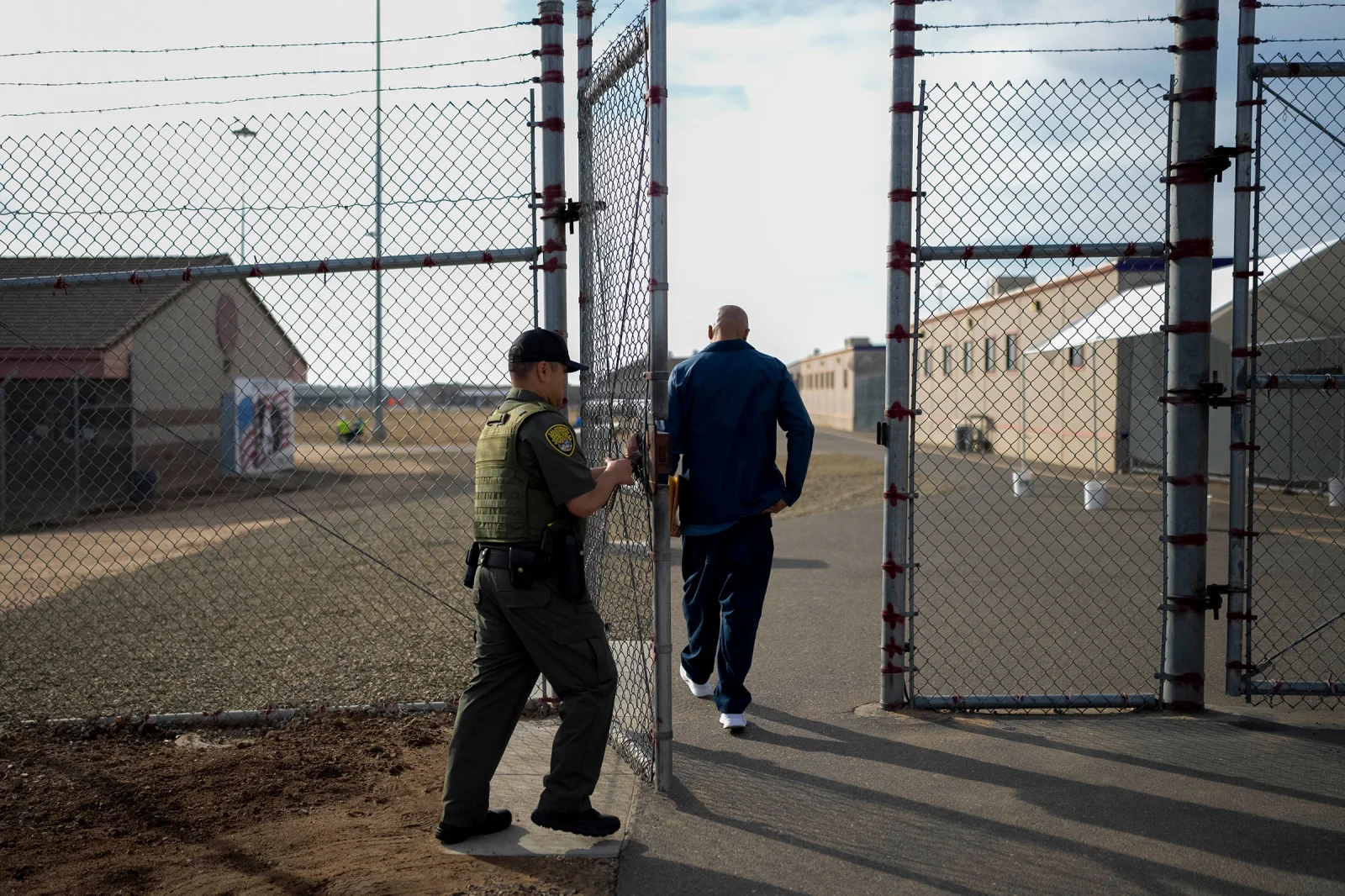
over the last few decades, the share of incarcerated people in U.S. state prisons serving long sentences has increased significantly—and it’s not necessarily keeping us safer, according to a new analysis by a nonpartisan criminal justice group.
A Council on Criminal Justice (CCJ) task force found in a report published Tuesday that almost two-thirds (63%) of state prisoners were serving sentences of 10 years or more; that’s up from 46% in 2005. The bulk of the incarcerated population in the U.S.—more than 80%—reside in state prisons.
The findings reflect that upticks in violent crime in urban cities in 2016 and 2020 have led policymakers to impose stringent policies with little scrutiny about their effect on public safety. Despite the potent politics around campaigning on “tough on crime” positions, members of the CCJ task force argue that long sentences don’t equate to safer communities.
“When violent crime increases in neighborhoods, sometimes lawmakers instinctively respond with demands for stiffer sentencing or increased punishment but those actions are often taken without regard to the effectiveness of the penalties imposed,” says Kathryn Bocanegra, an assistant professor at Jane Addams College of Social Work at the University of Illinois Chicago and member of the task force. “Just because we increase long term prison sentences, the evidence does not bear out, that that makes our community safer.” The report argues that a better use of government money would be to divert it towards grassroots evidence-based violence prevention programs that address the root causes of crime.
The task force behind the report includes a diverse array of perspectives, relying on expertise from law enforcement officials and former prosecutors as well as victims and survivors of serious crime and people who were incarcerated. Among its members are former U.S. Deputy Attorney General Sally Yates and former Congressman Trey Gowdy, a Republican from South Carolina.
The effects of longer sentences have been felt harder by Black prisoners; the gap between the number of Black prisoners facing longer sentences compared to their white counterparts widened from 0.5% to 4% from 2005 to 2019. The report calls for Congress and state legislatures to require data analysis about racial disparities in sentencing. “It raises questions that people have about the legitimacy of our criminal justice system. It’s important that people trust the fairness of our system,” says John Maki, director of the Task Force on Long Sentences at CCJ.
While murder defendants were the most likely to receive a long sentence of 10 years or more, those who had committed drug offenses made up the largest share (20%) of those serving long prison sentences of 10 years or more, according to the report.
Experts say that long sentencing became more common in the U.S. in part as a response to a spike in violent crime from the 1970s through the early 1990s, and those sentencing trends have continued today. “There’s very little public safety value that comes from the tail end of long sentences,” says Maki, and there is a “very diminished to no impact in terms of its ability to reduce recidivism.”
Sam Lewis, a member of the task force and executive director of the Anti-Recidivism Coalition, an L.A. based organization that provides resources and programming for formerly and currently incarcerated people focused on rehabilitation and reintegration into society, spent 24 years in prison before being released in January 2012. By the time he was 16, he had been shot twice. At 18, he was sentenced to life in prison for a murder he says he committed in connection with a gang he was involved with at the time. Long sentences can be particularly demoralizing, Lewis argues, even for prisoners who are trying their best to grow—and particularly in prisons with inadequate rehabilitative programming. “Now I’m at year nine and you tell me I still have another 15 years to serve, then I begin to ask myself: what more can I do? And I began to lose hope,” Lewis says. “What happens is you have a person that has given up on that transformation.”
Dr. LaDonna Butler, now a mental health counselor and member of Crime Survivors for Safety and Justice, a flagship program of Alliance for Safety and Justice, says she did not get what she needed after she was sexually assaulted in 1996. Butler says that she was able to access counseling support after her sexual assault, but that it was short-term and not comprehensive enough. “There was a significant disconnect between what I needed and what I received,” Butler says, adding that it “delayed (her) healing process.”
“For too long, the people most harmed by the criminal justice system, the people most harmed by violence, have been the least supported and have been excluded from conversations about safety and public safety,” Thomas says. He is now managing director of Crime Survivors for Safety and Justice, which organizes a national network of crime survivors, especially young men of color, to advocate for local, state and federal policies.
Crime survivors like Thomas and Butler say their vision of safety includes investing in programs that provide violence intervention and mental health support. “If it’s not making us all safer, then policymakers should not be funding it,” Butler says.
Most of those surveyed by the Alliance for Safety and Justice supported a shift away from prioritizing funds for prisons and jails. Instead, they support focusing on prevention, mental health and reentry to help the formerly incarcerated transition back into their communities—with about 80% supporting federal investments to increase the use of community-based violence prevention workers to prevent crime.
State prisons in the U.S. are getting longer sentences — but not necessarily for us Safer