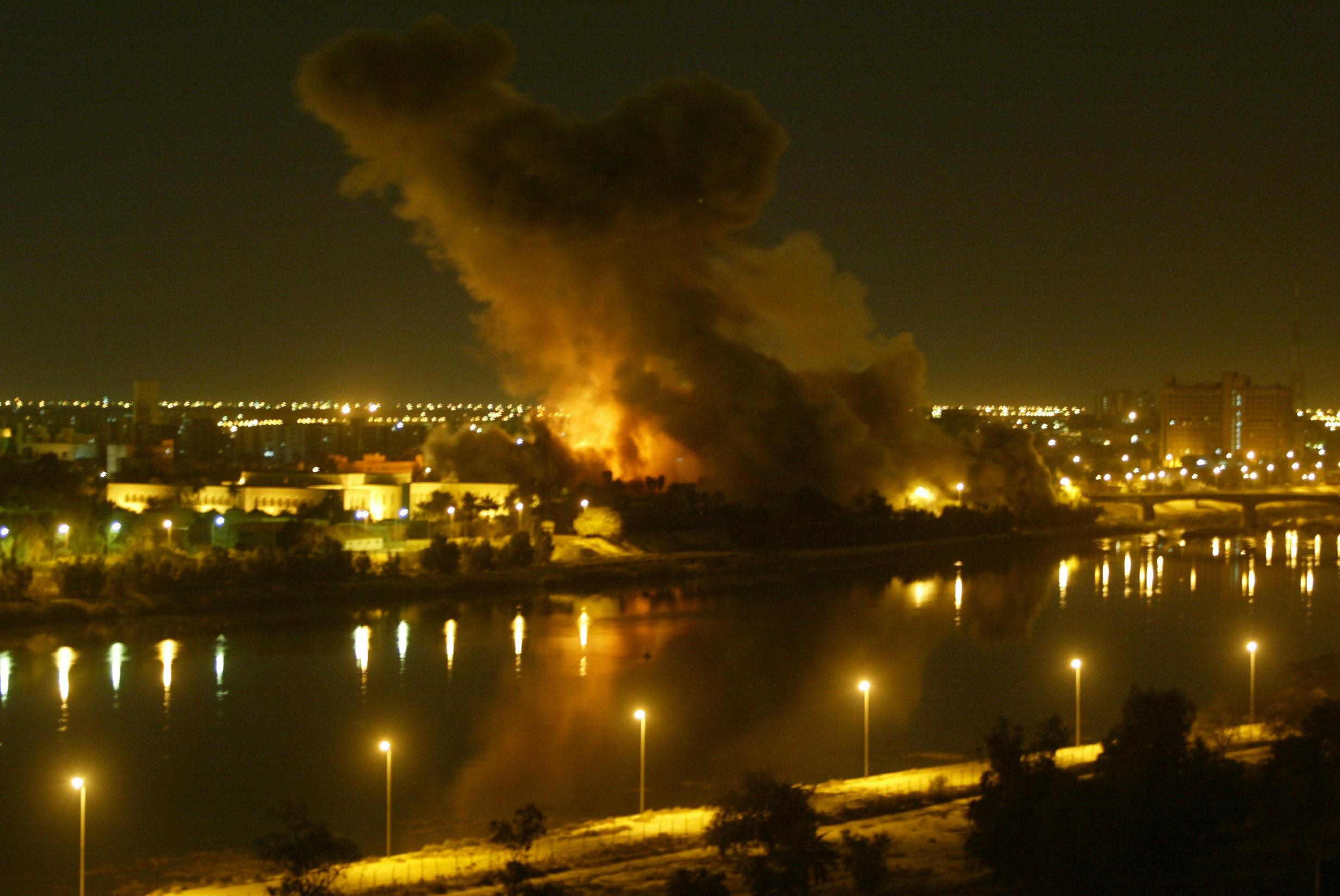
It had been clear that Bush wanted a war on Iraq since his January 29, 2002, “Axis of Evil” speech. This author wrote immediately that such a war would be a bad idea. Anticipating “regime change” (a nice way of saying “conquer someone else’s country”), I wrote that we would be going into a place that we didn’t know, egged on by false friends, such as the notorious double-dealer Ahmed Chalabi, who was as popular in Washington, DC, think-tanks as he was unpopular on the streets of Baghdad. I wrote at the time:
Is this what we can expect in Iraq — our chosen friends displaced by our unchosen enemies? There’s no way to know. But as the American experience in Afghanistan suggests, we don’t know much of anything about Muslim politics. Indeed, about the only thing we can know for sure about Iraq is this: American gains will be secure for only as long as Americans remain.
So, of course, the war proved to be a fiasco. As one history-minded observer wrote last week: “This month marks the 20th anniversary of the greatest western foreign policy disaster since the Fourth Crusade. It was the pre-eminent modern-day example of folly, driven by wishful thinking, utopianism and a lack of interest in history and how human societies differ.”
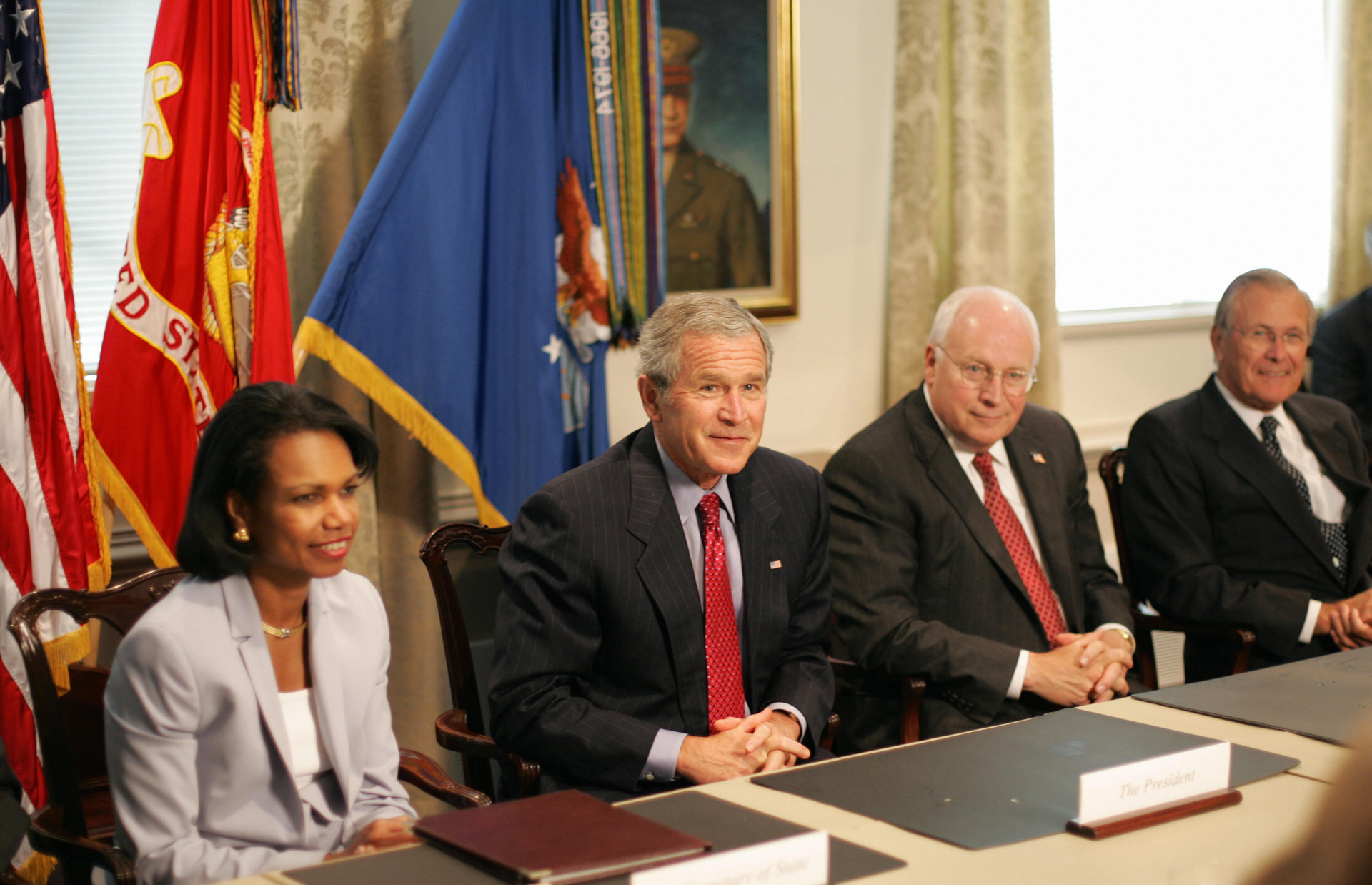
From left to right: Secretary of State Condoleezza Rice, President George W. Bush, Vice President Dick Cheney, and Secretary of Defense Donald Rumsfeld during a meeting on August 14, 2006, at the Pentagon. (TIM SLOAN/AFP via Getty Images)
To be sure, historians will be evaluating Iraq and all its global implications for a long time to come. But it’s already clear that the war pushed Iran, Russia, and China into a tighter alliance, which they considered to be self defense. So, how should the U.S. deal with a hostile Eurasian bloc in the heart of the “world island”? That’s a riddle that will preoccupy foreign policymakers for the next hundred years or more.
But for now, we might just consider some of the domestic effects of Bush’s war.
We can start with the outright costs of the war. Then we can observe various political costs — specifically, how the war broke the Bush political dynasty. More broadly, the war broke our faith in government experts. It also clarified the reality of the so-called “Uniparty,” which helped in the rise of Donald Trump in 2016. And finally, the war validated the thinking behind America First.