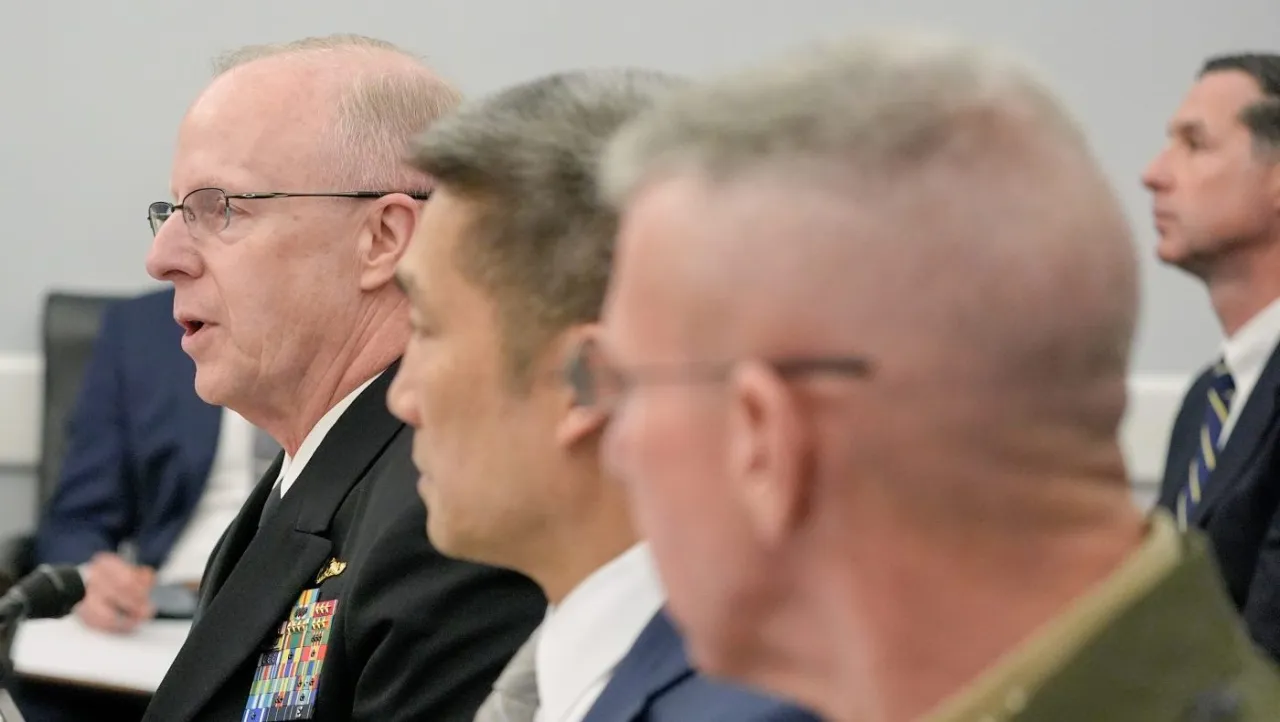
Naval Operations Chief Adm. Daryl Caudle said Thursday that without supplemental funding for the U.S. war in Iran, he will have to implement cuts in training, routine operations and personnel by July.
“The [fiscal 2026] budget didn’t bake in [Operation] Epic Fury,” Caudle said during a House Armed Services Committee hearing. “You see a large Navy force in the Middle East. So we’re burning bright … but it does come at cost, and it comes at operational costs.”
To have the funds necessary to continue the war effort — which is quickly racking up fuel costs, operating hours, maintenance dollars and munitions — “I do fear that I’ll have to start making decisions in the July time frame,” Caudle said.
He added that manpower accounts will take a hit without additional funding, with the Navy having to put a hold on between 12,000 and 15,000 new sailors he’s trying to give a permanent change of station (PCS).
“My record recruiting is going to be thwarted without additional funding to PCS to those individuals from boot camp and to pay enlistment and reenlistment bonuses,” according to Caudle.
The cost of the U.S.-Israeli war in Iran continues to balloon since it began on Feb. 28. As of Tuesday, the Pentagon has assessed its price tag at nearly $29 billion, up from $25 billion two weeks ago.
The Defense Department has had to pull funding from various accounts to fund the conflict, with the White House expected to ask Congress for a $80 billion to $100 billion supplemental to foot the bill — with a large chunk to backfill depleted munitions used in the fighting.
But the prospects for that request are in “big trouble,” GOP senators told The Hill this week, as lawmakers have grown frustrated with the administration’s lack of a clear plan in the war, from which President Trump is currently seeking an off-ramp.
Congress is also still waiting on the official supplemental request. Rep. Ken Calvert (R-Calif.) on Tuesday said it would be helpful to get “sooner rather than later, so we can get to work.”
“I would hope we can get a supplemental bill here soon,” Calvert, the chair of the House Appropriations Subcommittee on Defense, told Defense Secretary Pete Hegseth during a panel hearing. “Obviously we know of the munitions issue and we know of the cost of this conflict. … Any idea of when we’re going to get this supplemental?”
Hegseth declined to answer, saying only that the Pentagon is “well aware of all of those dynamics.”