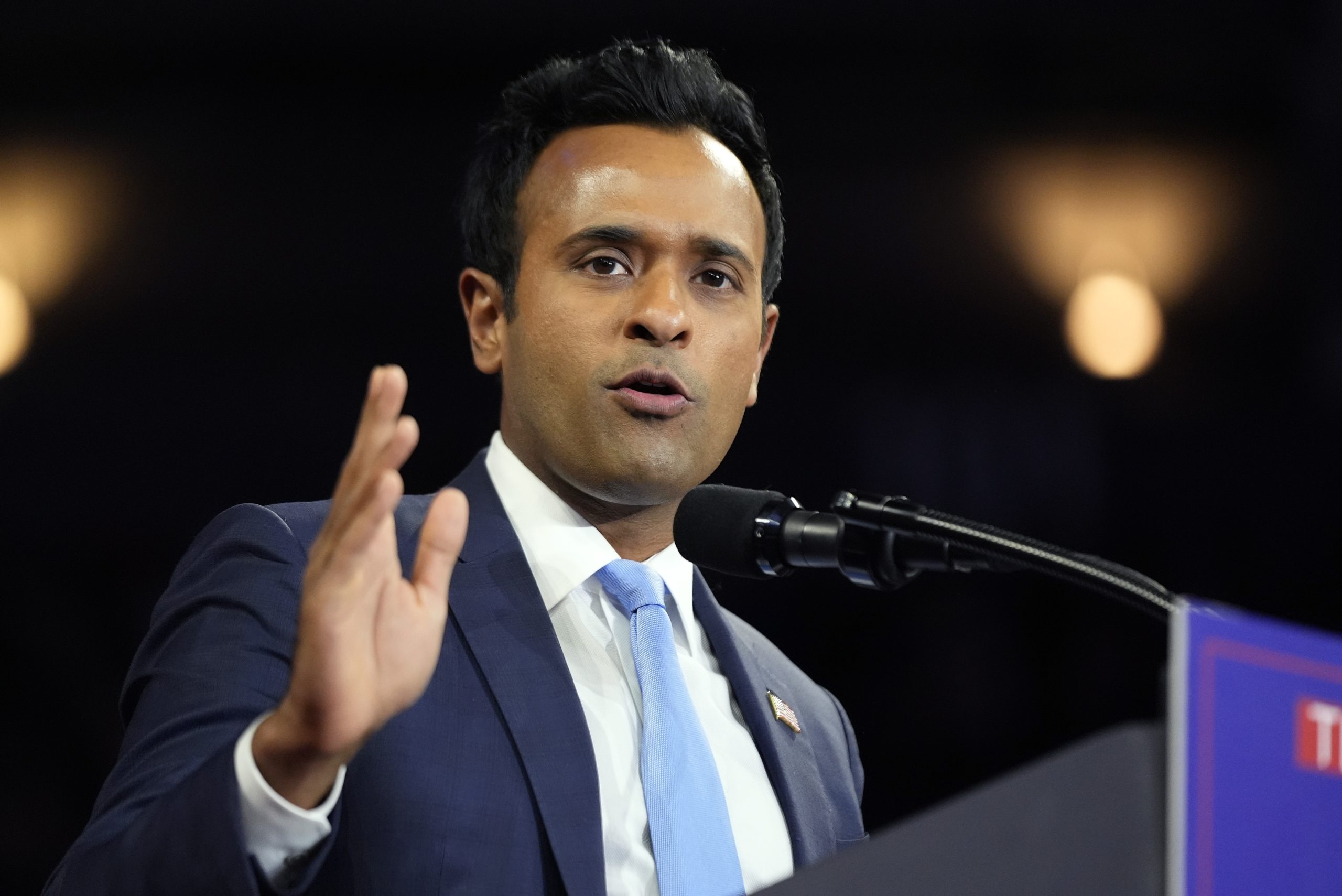
Businessman Vivek Ramaswamy has won Ohio’s Republican primary for governor, NBC News projects, advancing to what could be an expensive and competitive general election in a state that has been brutal for Democrats in recent elections.
Amy Acton, a former state health director, won the Democratic nomination Tuesday without opposition.
Ramaswamy, 40, defeated Casey Putsch, a political novice known for his “car guy” videos on YouTube. Putsch’s campaign played out largely through social media missives, some of them targeting Ramaswamy’s Indian American heritage. A third GOP candidate, Heather Hill, was removed from the ballot under a provision in state law after her running mate for lieutenant governor withdrew from the race.
“I know the American Dream exists because I’ve lived it right here, in the state where I was born and raised,” Ramaswamy said in a statement after his victory was called. “We’re going to revive that American Dream in Ohio once again — with lower costs, bigger paychecks, and better schools for all Ohioans. I am grateful to everyone who helped us win today’s election by historic margins, and I look forward to a decisive victory again in November.”
Ramaswamy’s running mate for lieutenant governor is state Senate President Rob McColley. Acton is running with David Pepper, a former Ohio Democratic Party chair and past nominee for state attorney general and auditor.
Gov. Mike DeWine, a Republican, is term-limited.
Polls suggest a potentially close race between Acton and Ramaswamy in a state that has not elected a Democrat as governor in 20 years. DeWine won re-election four years ago over former Dayton Mayor Nan Whaley by 25 points — a testament to a unique brand that attracted independent and even some Democratic voters.
Ramaswamy became wealthy in the biotech industry and gained attention as a Republican presidential candidate in 2024. He dropped out after that year’s Iowa caucuses, endorsed Donald Trump and remained close with the once and future president’s MAGA movement.
As Trump prepared to return to the White House, Ramaswamy worked with billionaire Elon Musk to set up a Department of Government Efficiency, a federal initiative aimed at cutting costs that quickly became a political flash point. Ramaswamy resigned from the project ahead of Trump’s 2025 inauguration to prepare his campaign for governor, which Trump endorsed the night it launched.
“Vivek Ramaswamy is an out-of-touch presidential also-ran whose harmful agenda would drive costs even higher and make life harder for Ohio families already struggling to make ends meet,” Meghan Meehan-Draper, executive director of the Democratic Governors Association, said in a statement Tuesday night.
Ramaswamy’s fortune and close ties to Trump underpin his campaign. He has raised $25 million from donors and recently chipped in $25 million of his own money. Those sums make it likely that Ohio’s race for governor this year will be the most expensive in the state’s history. Ramaswamy, despite a largely unthreatening primary challenge from Putsch, has been airing commercials for weeks as part of an initial $10 million ad blitz.
Acton, 60, became a household name in Ohio when she was DeWine’s health director during the early days of the Covid pandemic.
She emphasizes that she grew up poor in Youngstown and lived a difficult childhood marked at times by hunger and homelessness. Acton does not have Ramaswamy’s direct access to cash, though both raised about $5 million from donors in the first campaign finance reporting period of 2026. But Ramaswamy, thanks to his personal investment, reported having more than $30 million on hand, while Acton had $5 million.
During her time in state government, Acton became a target of right-wing activists and protesters, some of whom reportedly wielded guns and signs scrawled with antisemitic messages outside the Statehouse in Columbus and outside her home. Acton, who is Jewish, downplayed that scrutiny as a factor in her resignation in June 2020. Later in 2020, after Acton gave an interview to The New Yorker, the magazine reported that she had begun to “worry that she might be forced to sign health orders that violated her Hippocratic oath to do no harm.”