House Republicans have teed up a vote to renew the nation’s spy powers that has those on varying sides of the issue crying Groundhog’s Day.
The GOP is once again moving ahead with legislation to reauthorize Section 702 of the Foreign Intelligence Surveillance Act (FISA), which allows the government to spy on foreigners located abroad.
Despite spending over a week on a new bill after a disastrous floor vote failure earlier this month, the latest package does not include the warrant requirement demanded by some holdouts.
The House Rules Committee met for a second session on Tuesday after failing to reach consensus on Monday over how to advance the bill to the floor for debate.
But to win over hard-line GOP members, leadership has sought to sweeten the deal by adding a provision to prohibit the federal reserve to establish a central bank digital currency, something Republican privacy hawks say would give the government the ability to track consumer spending. That legislation already passed the House and would be attached to FISA before it is sent to the Senate.
It’s unclear the GOP will be able to get sufficient support for procedural vote on the House floor to take up the bill – possibly stalling the legislation for the second time in a month.
Asked whether the House could avoid a repeat of the chaotic scene on the floor when Section 702 was last under consideration, House Judiciary Chair Jim Jordan (R-Ohio) said Monday, “We’ll just have to see.”
Rep. Jim Himes (D-Conn.) the top Democrat on the House Intelligence Committee, said while the latest package has some reforms, it’s not as robust as a plan he and other Democratic leaders worked on that he said had been ignored by GOP leadership.
“The answer to that question is: Can Republicans pass a rule? If the Republicans pass a rule, look, there are dozens of Democratic ‘yes’ votes on a clean extension. But that’s nobody’s preference,” he said.
“This seems like the same play they ran at 2:30 in the morning two weeks ago,” he said.
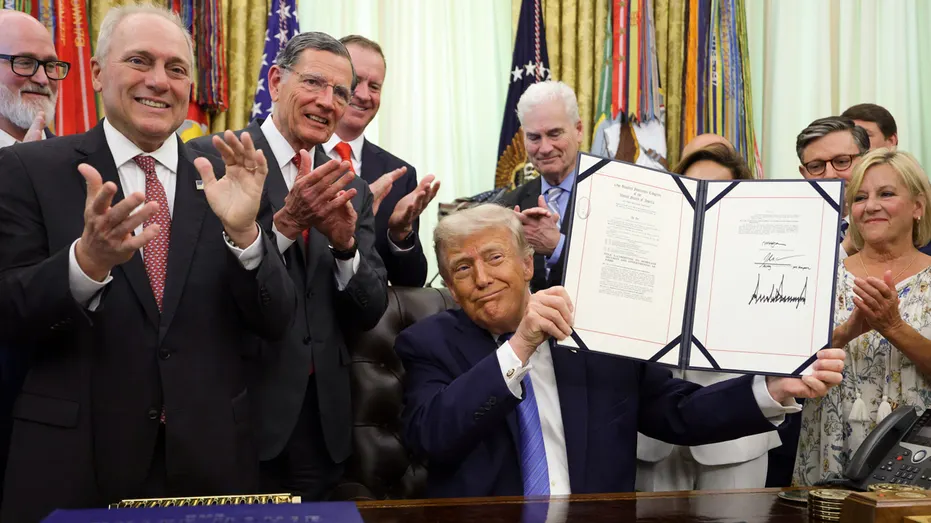
In seeking to block a warrant requirement amendment from being further considered, Chair Virginia Fox (R-N.C.) described the matter as unnecessary under Trump.
“I’m convinced that this has been fixed. As long as we have Republicans in office, I believe it is fixed. The President has asked for a clean extension,” she said.
Rep. Mary Gay Scanlon (D-Penn.) noted that a three-year FISA extension would bump the powers into the next administration.
“What we should have, instead of ping ponging among administrations, is we should have a clear line in the sand that if you’re going to spy on American citizens, you should have to go before a judge to do that,” she said.
During the week before last, some Republicans banded with Democrats to tank both a new Section 702 package and a procedural vote to take up a clean 18-month extension of the bill. In doing so, a few GOP members rejected a new Section 702 proposal they had been involved in negotiating.
That situation could very well repeat itself. Republicans can only lose two votes with the chamber’s razor-thin margin, and many House Freedom Caucus members say they plan to vote against the rule to take up debate on the larger package. Four Democrats previously broke with their party on the last FISA vote, but it’s unclear if they will do so again, or in sufficient numbers to help Republicans advance the bill.
Rep. Tim Bruchett (R-Tenn.) said “heck no” when asked if a late-Monday conference meeting had changed his mind on Section 702.
“They need to gut FISA and come back with a different product. I think change the name, go back to what it originally was supposed to do, to spy on folks that are non-Americans and provide some clarification that it won’t be used to spy on us,” he said.
“I’m sure some vigorous arm twisting will occur tonight.”
The product now set to be voted on Tuesday has many of the same parameters.
The reforms included would direct FBI agents to get attorney approval before running any query on an American, a process that a supervisor can currently OK.
It would also direct the attorney general to begin a process to allow a larger pool of lawmakers to review Section 702 information at the Foreign Intelligence Surveillance Court, a process now limited to the leadership of the intelligence and judiciary committees of both chambers.
It also requires queries of Americans to be reviewed by the civil liberties protection officer at the Office of the Director of National Intelligence (ODNI) on a monthly basis.
“I feel like this is like watching reruns, because we’ve had this discussion before members want to vote on legislation that has a warrant requirement for searching U.S. person data in the Section 702 database. That has been the issue from the beginning, and it remains the issue now,” Rep. Jim McGovern (D-Mass.), the top Democrat on the House Rules Committee, said amid a discussion over whether to clear the bill for the floor.
Some Freedom Caucus members have shifted their stance and plan to support the latest bill.
“I think collectively, the set of reforms gives you the chance to detect enough things within 702,” said Rep. Warren Davidson (R-Ohio), adding he believes Congress would be alerted to any abuses of the spy tool.
“I don’t think it’s a perfect bill. Don’t get me wrong. I think there’s a lot you could do and still be secure, but the people that do it for a living, day to day, aren’t confident of that. So I’m like, alright, we’ve got enough surveillance of what you’re doing in there for me to feel like we can probably detect it. If we can’t, great, it’s going to get reviewed again here soon.”
But Scanlon said she was not satisfied by the protections, noting that the bill leaves the intelligence community to police itself.
“The so-called reforms in this FISA bill essentially consist of [Director of National Intelligence] Tulsi Gabbard checking [FBI Director] Kash Patel’s homework.”
Proponents of reauthorizing Section 702 say the reforms in the 2024 bill are working.
The reforms, coupled with a tech fix that ended the practice of immediately opting officers into searching the database, have seen searches of Americans drop 2.9 million in 2022 to just over 9,000 in the year after the last renewal of Section 702.
Jordan, who reversed his position this year when he said he would back Section 702 without a warrant requirement, said those 56 reforms “have made a marked difference.”
“In simple terms, when you got more people in the front end who have to approve a query, particularly in this proposed legislation, you got an attorney who has to sign off. So you got more checks and balances on the front end,” he said.
“And then, of course, you now have the 30 day look back,” he said of the ODNI review. “So it’s all designed for more transparency.”