Less than two weeks after NASA’s Artemis II mission, the crew’s observations from their lunar flyby are already providing insights into what it might take to build a base on the moon, NASA Administrator Jared Isaacman said Thursday.
In a live conversation with NBC’s Lester Holt and former NASA astronaut Sunita Williams, Isaacman said that findings from Artemis II are shaping the agency’s plans to build infrastructure for long-term stays on the lunar surface. The panel discussion was part of an event for Common Ground, an NBC News franchise bringing together leaders with different perspectives to focus on solutions to pressing issues.
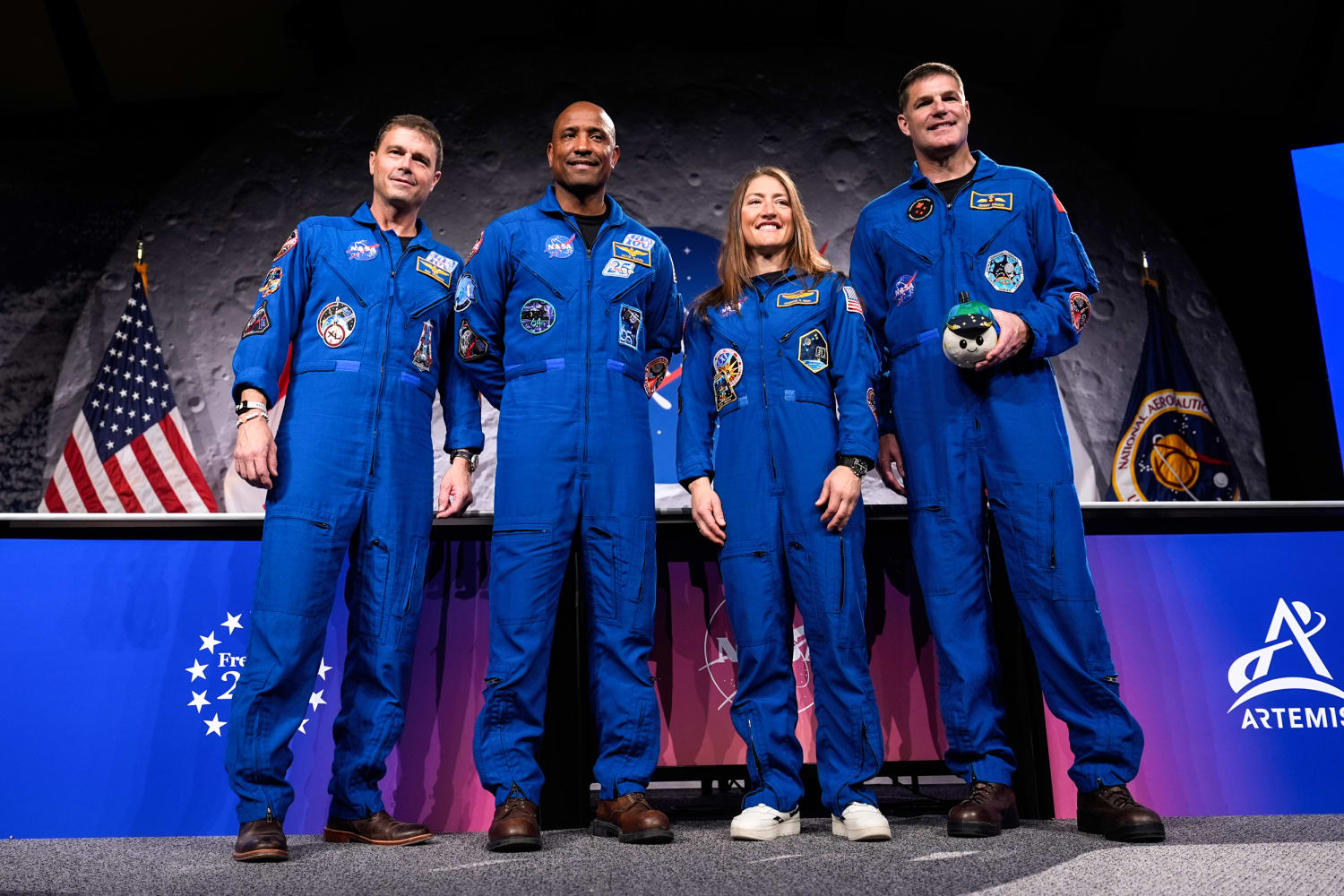
The Artemis II mission launched April 1, sending NASA astronauts Reid Wiseman, Christina Koch and Victor Glover, and Canadian astronaut Jeremy Hansen, on a 10-day trip around Earth and the moon. The crew reached their closest point to the moon on April 6, when they spent seven hours taking photographs and making observations during their flyby. The astronauts were the first ever to see the entire far side of the moon with their own eyes.
Isaacman described a moment at the tail end of the lunar flyby as being particularly revelatory: While witnessing a solar eclipse, the astronauts reported seeing multiple flashes of light on the moon. The flashes were caused by rocky objects smacking into the lunar surface, and the astronauts’ observations of them caused scientists in Mission Control at the Johnson Space Center to erupt in cheers.
“Everybody got excited because there was a question of whether or not they’d be able to see it,” Isaacman said. “I mean, you just look at the surface the moon, it takes a beating, right? But they actually saw it, and that allows us to maybe update our models of how often is it taking a beating. And if you know that, it might inform your roof design when you build a moon base.”
Last month, Isaacman announced that NASA had canceled a plan to build a space station in orbit around the moon and will instead repurpose the components of that station to construct a $20 billion base on the lunar surface.
That announcement followed an even bigger announcement in February, when Isaacman overhauled NASA’s Artemis return-to-the-moon program with the goal of increasing the pace of launches ahead of a targeted moon landing in 2028.
The changes included adding a mission, Artemis III, in mid-2027, to test rendezvous and docking technologies in low-Earth orbit with one or both of the lunar landers that SpaceX and Blue Origin are developing. If that’s successful, NASA then intends to launch the Artemis IV mission to land on the moon the following year. The agency’s plan calls for one of those commercially built vehicles to dock with its Orion spacecraft then carry astronauts to the lunar surface.
“If something doesn’t work the way we expect, we’d rather be hours away from being back in the water and not days,” Isaacman said of the Artemis III test flight. “What we learn from that will roll into Artemis IV in 2028, and that’s where we’re going to land astronauts on the moon. And in parallel, we’re building the moon base.”
Williams, who retired from NASA in December 2025, said the International Space Station is also an important proving ground for future long-term stays on the moon.
“We’ve had human presence on the International Space Station since 2000, so we’ve learned a lot,” Williams said, adding that long stays at the orbiting lab have taught NASA about the ways exercise and nutrition can counteract some of the negative effects of microgravity on the human body.
“We’ve learned about engineering and manufacturing, even biomedical engineering, doing research on stem cells and DNA sequencing while we’ve been up on the space station,” she said. “The space station has provided us with a myriad of technologies that we can apply on this moon base, and as we get ready to live there for longer periods.”
Williams knows about long stays off the planet. Before her retirement, she logged a total of 608 days in space, with three stays aboard the International Space Station. Her most recent visit occurred last year, when Williams and NASA astronaut Butch Wilmore unexpectedly spent more than nine months at the orbiting outpost after they encountered problems on a test flight of Boeing’s Starliner capsule.
When asked if they would sign up for a stint on the moon if given the chance, both Williams and Isaacman were eager volunteers.
“I suspect our answer would be the same on this one,” Isaacman said. “Yes!”