WASHINGTON, April 22 (UPI) — Health care proponents warn that the Department of Health and Human Services’ proposed 12% budget reduction would widen racial disparities and gut critical infectious disease funding.
The 2027 fiscal year departmental budget proposes eliminating the National Institute on Minority Health and Health Disparities and stripping $923 million in HIV/AIDS funding, among other cuts that Congress rejected last year.
“This is truly a life or death situation,” said Timothy Jackson, advocacy director for the AIDS Foundation of Chicago. “By 2030, if these cuts were to be enacted … we would see 143,486 new diagnoses across the country.”
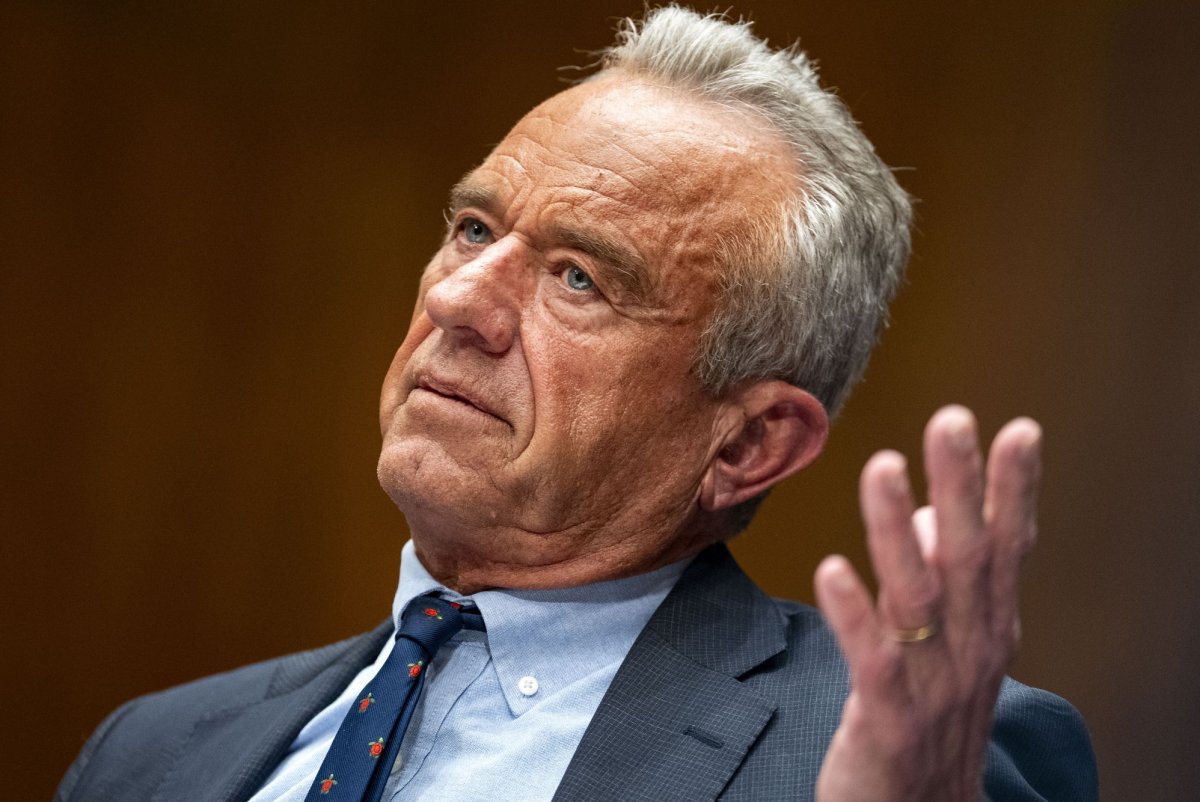
Members of the U.S. Senate Committee on Health, Education, Labor and Pensions drilled down on proposed cuts during a Wednesday hearing at which Secretary Robert F. Kennedy Jr. testified.
Senators questioned the cancellation of “woke” grants and expressed concern about the future of maternal healthcare, minority healthcare and HIV/AIDS programming.
“We’ve been asked to make cuts across the department of 12%, and I don’t think Russ Vought wants to cut our department. Nobody in our department wants to cut it – we have a $39 trillion debt,” Kennedy told the senators. “We’re reorganizing, we are.”
Countered Sen. Patty Murray, D-Wash: “We’re shoveling more money at defense contractors, but we’re slashing NIH by more than $5 billion, fewer patients getting life-saving treatment, cutting CDC by a third so we can’t respond to dangerous outbreaks, slashing investments in mental health and addiction treatments. People will fall through the cracks.”
Kennedy’s reorganization includes potential elimination of a National Institutes of Health branch tasked with scientific research into improving minority health and reducing health disparities.
The proposed budget also cuts $106 million from HHS’ Agency for Healthcare Research and Quality. A White House memo claimed the agency “pushed radical gender ideology onto children.”
HHS said the reduction would eliminate “duplicative or wasteful research efforts, ensuring that taxpayer-funded work is coordinated with existing efforts at the NIH.”
“The budget also prioritizes protecting children from radical gender ideology,” an HHS spokesperson said in an email. The Agency for Healthcare Research and Quality “will continue to support research on health care quality safety, and affordability, with careful stewardship of taxpayer funds to benefit all Americans.”
However, medical experts said that what the Trump administration calls consolidation is really a targeted cut that would hurt minorities.
“The message that we’re getting is: We should not be focusing on any disease or injury, method of care or research that understands an existing and increasing disparity by race,” said Roger A. Mitchell Jr., president of the Maryland-based National Medical Association, which represents African American physicians and patients.
Diseases including obesity, diabetes and sickle cell anemia disproportionately affect Black Americans, said Earl Harley, a pediatric otolaryngologist who leads the D.C. chapter of the association. A reduction in funding will likely worsen that and mean patients first come to physicians when they are in later stages of disease, he said.
“This would result in a delay in people getting the care they need,” Harley said. “It’s a disaster for the health of minority people.”
The HIV/AIDS programming on the chopping block includes all $755.6 million of the Center for Disease Control and Prevention’s core HIV prevention funding and the only federal initiative dedicated to housing low-income people living with AIDS, according to the AIDS Foundation of Chicago.
For Jackson, fighting those cuts, which he said would be impossible to plug with alternate funding, is more than political. He’s been living with HIV for 16 years. In that time, he has seen more treatments and preventative medications become available to people, including pre-exposure prophylaxis, or PrEP.
“This administration is trying to roll back all of that progress,” Jackson said. “It’s deeply personal, I understand that when I was newly diagnosed that I relied on many of these programs that I am now trying to save.”