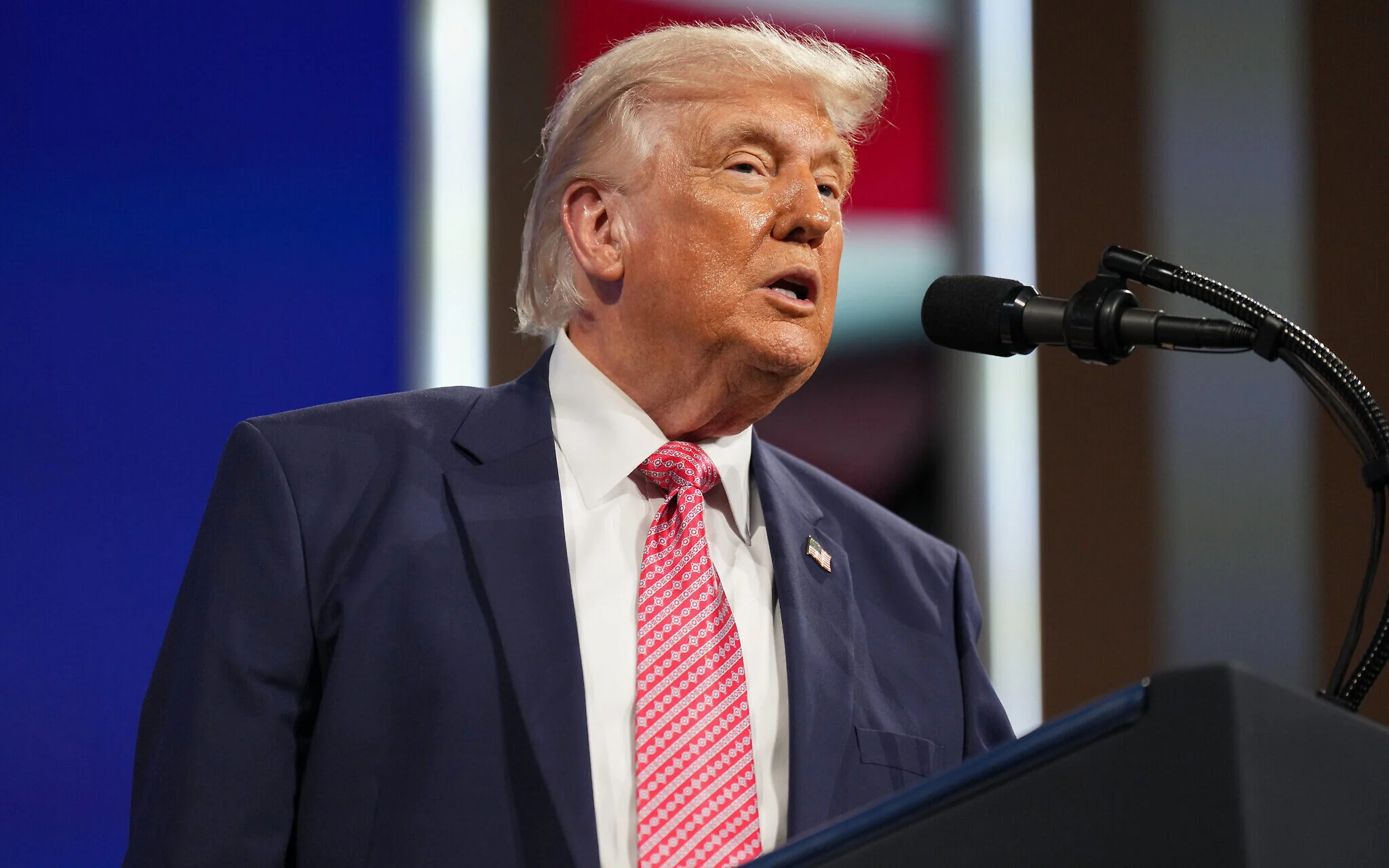
President Trump on Sunday argued the U.S. has already forced regime change in Iran, pointing to the death of multiple Iranian leaders since joint U.S.-Israeli forces launched attacks a month ago.
Speaking to reporters aboard Air Force One, Trump said he wasn’t sure if the U.S. would reach a deal with the current Iranian leadership to end the war.
“But we’ve had regime change, if you look already, because the one regime was decimated, destroyed. They’re all dead. The next regime is mostly dead. And the third regime, we’re dealing with different people than anybody’s dealt with before,” he said.
“It’s a whole different group of people. So I would consider that regime change,” he added.
The Islamic regime that has ruled Iran since staging a revolution in 1979 remains in control of the country, despite U.S.-Israeli strikes taking out many of its top leaders.
Supreme Leader Ali Khamenei was killed in the first wave of strikes on Feb. 28. Following his death, Khamenei’s son, Mojtaba, was appointed to replace him. Mojtaba Khameini, seen as a more hardline figure than his father, is also believed to have been injured in the strikes and has not made any public appearances since the war started.
The country’s president, Masoud Pezeshkian, remains in his position. Pezeshkian was among three members of a transitional council that led the country after the elder Khameini’s death. The two other members of that council, Chief Justice Gholam-Hossein Mohseni-Eje’i and Ayatollah Alireza Arafi, are still alive and in positions of power.
However, dozens of Iranian officials have been taken out in strikes.
Ali Larijani, who served as secretary of the powerful Supreme National Security Council, was killed two weeks ago. The U.S. and Israel have also killed the head of the Iranian Defence Council, commander of the Islamic Revolutionary Guard Corps, chief of staff of the Iranian Armed Forces and the head of the paramilitary Basij forces.
Trump said Sunday he is negotiating with Iran’s parliamentary speaker, Mohammad Bagher Ghalibaf, to discuss the possibility of a ceasefire. Ghalibaf has been a powerful figure in the Iranian regime for decades and was a close ally of the elder Khameini.
Ghalibaf has publicly denied U.S. claims of negotiations, though Pakistani intermediaries confirmed last week that a 15-point U.S. ceasefire proposal was delivered to the Iranians.
“We have emissaries, but we also are dealing directly,” Trump told reporters on Air Force One.
Iran’s leaders publicly countered the U.S. proposal with a list of five conditions for an end to the war, one of which was maintaining control of the Strait of Hormuz.
In his first public remarks on the war, Trump called on Iranians to rise up against the Islamic regime. However, he has more recently conceded that an uprising is unlikely given the repressive nature of the government, suggesting he may be willing to work with remnants of the regime, as he has in Venezuela since capturing its longtime leader, Nicholas Maduro.
Trump told the Financial Times on Sunday that his “favorite thing” in Iran would be taking the country’s oil.