AUSTIN (Nexstar) — Gov. Greg Abbott announced an investigation into the federal H-1B visa program in “light of recent reports of abuse,” according to a letter signed by the governor. He directed all state agencies controlled by a gubernatorially appointed head and public institutions of higher education to freeze all H-1B visa applications until May 2027.
Those institutions are also required to submit a report to the Texas Workforce Commission by March 27 that identifies how many H-1B visa holders the agency currently sponsors, how many applications and renewals it has filed, the country of origin for the H-1B visa holders, their roles, when their visa expires, and any proof that the agency tried to fill the job currently held by a visa holder with a Texas candidate first.
The Texas Workforce Commission told Nexstar it does not currently keep track of the number of Texas employees sponsored under a H-1B visa because it is a federal program.
The freeze on new and renewal applications will remain in effect until after the completion of the 90th state legislative session, which will gavel in on January 2027.
“State government must lead by example and ensure that employment opportunities — particularly those funded with taxpayer dollars — are filled by Texans first,” Abbott said in a news release announcing the investigation.
Abbott hinted at the freeze during an appearance on the Mark Davis Show on Monday where he called the H-1B program an extraordinary controversy. “We want to make sure that our communities are not being — having people come in and take jobs that Texans can easily fill,” Abbott said on the radio show.
Nexstar asked the Governor’s Office if there was any specific example of fraud or abuse of the H-1B program. A spokesperson with his office did not point to a specific example but said there was a lot reporting around the federal program.
Republicans in Washington D.C. have filed bills to abolish the program over concerns it is taking away jobs from American workers.
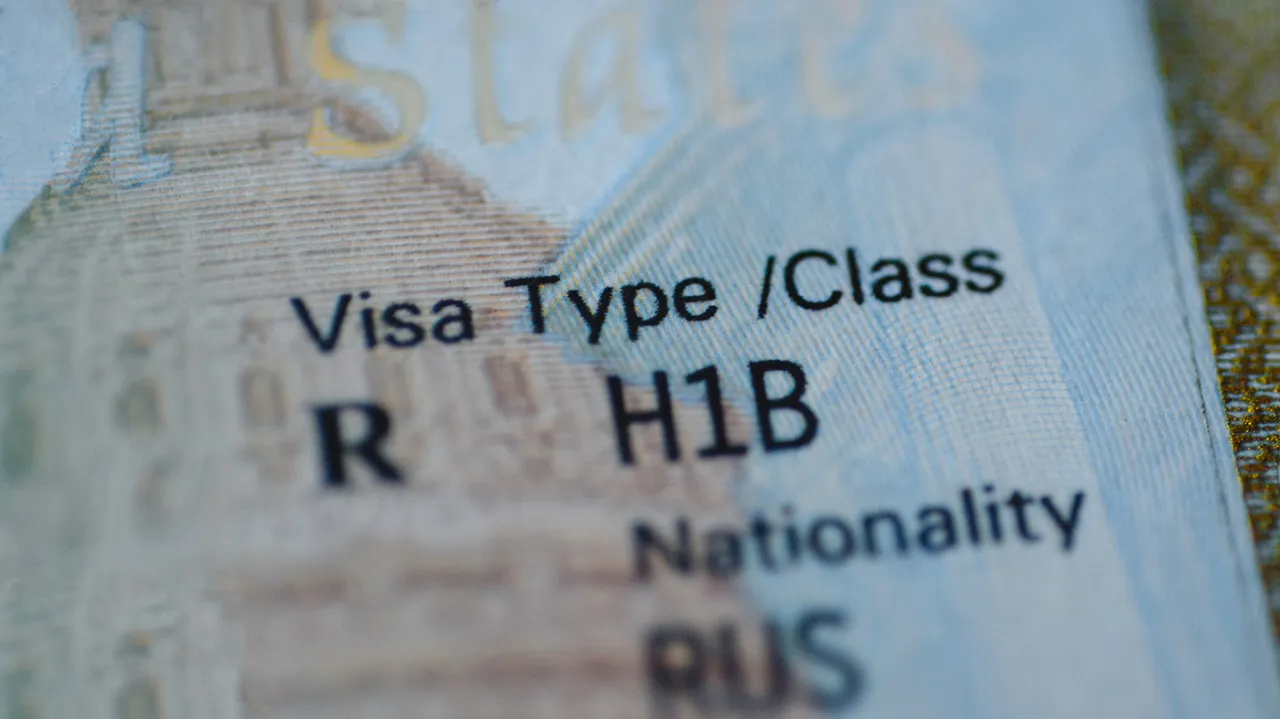
The H-1B program allows companies to hire foreign nationals for “specialty occupations.” The intent was to help companies hire for specialty skills if they could not find those skills in the American workforce. The U.S. Department of Labor requires companies to pay H-1B visa holders at least the same amount paid to other workers with similar experience, or the prevailing wage, whichever is highest.
Jason Finkelman, an immigration attorney, compared attacking the program to shooting yourself in the foot. He said public universities are in desperate need for highly-skilled and qualified researchers and professors.
“Because it’s important for them to be able to teach and train US workers with the best talent they need,” Finkelman said.
The federal government caps the number of H-1B visas to 85,000 per year, but it allows certain cap-exempt institutions to apply all year long and not be subject to that limit. Universities are an example of a cap-exempt institution.
According to federal data, Texas A&M University was awarded 214 H-1B visas in fiscal year 2025. A spokesperson for the university system said it stopped applying for new H-1B visas after the Trump required employers to pay $100,000 for each visa holder.
“We have received Governor Abbott’s directive ordering a freeze on new H-1B visa petitions at Texas public institutions of higher education, and we are fully complying with that directive,” a Texas A&M University System spokesman said in an email. “The System remains committed to protecting Texas taxpayers, complying with the law, and ensuring that Texas students and communities are served by a strong and qualified workforce.”
The Texas American Association of University Professors, which is affiliated with the Texas American Federation of Teachers, denounced the governor’s decision on Wednesday morning.
“Governor Abbott’s order will hurt the student experience and diminish the value of teaching and research at Texas institutions of higher education,” Dr. Brian Evans, president of Texas AAUP-AFT, said in a news release. “Nowhere will that impact be more pronounced than our world class university medical centers.”
“Patients don’t care where their doctors and nurses are from, as long as they’re getting the best possible care,” Evans said. “Texas needs its public universities to continue being the economic engines driving the state, not mere vehicles for Governor Abbott’s political agenda.”
Finkelman also questions what authority the governor has when it comes to a federal program.
“I’m not sure what, if anything, the governor can actually do as it pertains to limiting universities’ ability to utilize the H-1B visa program,” Finkelman said.
On Wednesday, Texas Attorney General Ken Paxton announced his office is investigating three North Texas businesses accused of abusing the H-1B visa program. Paxton’s office alleged these companies “engaged in fraudulent activity.”
“Any criminal who attempts to scam the H-1B visa program and use ‘ghost offices’ or other fraudulent ploys should be prepared to face the full force of the law,” Paxton said. “Abuse and fraud within these programs strip jobs and opportunities away from Texans. I will use every tool available to uproot and hold accountable any individual or company engaged in these fraudulent schemes. My office will continue to thoroughly review the H-1B visa program and always work to put the interests of Americans first.”