Court considering legality of state law banning guns on private property open to the public unless owner allows it
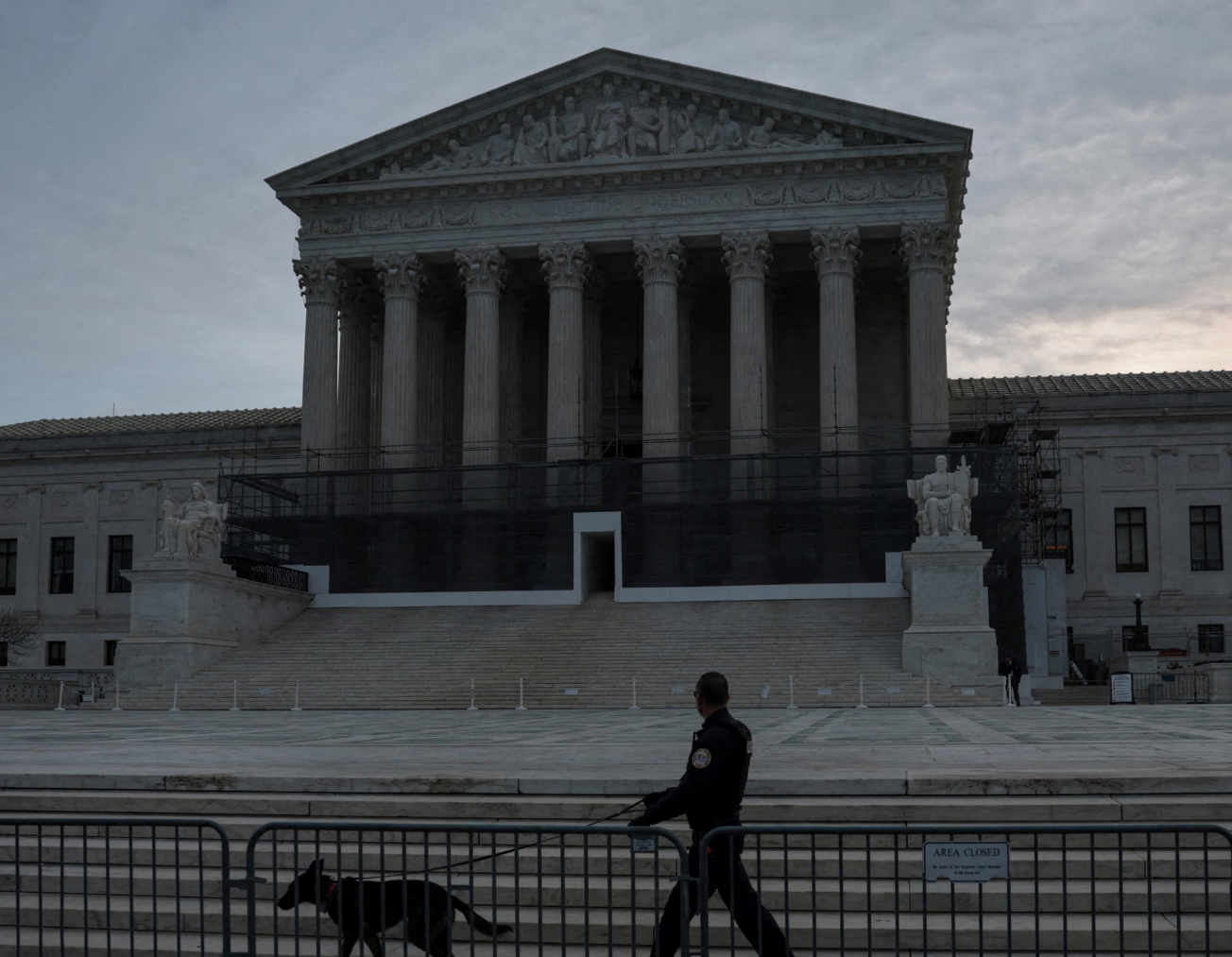
The conservative majority on the US supreme court appeared skeptical of a Hawaii law that bans people from bringing firearms on private property open to the public without permission from the property owner.
The case, Wolford v Lopez, was brought by three Maui residents with concealed-carry permits and a local gun group who have support from Donald Trump’s administration.
The case has its origins in 2022, when the supreme court ruled in New York State Rifle & Pistol Association v Bruen that the second amendment included the right to carry concealed and loaded handguns in public.
After that ruling, Hawaii, which has very strict gun laws, passed a law allowing more people to carry concealed firearms, but banning the practice at so-called “sensitive places” like beaches, banks and restaurants serving alcohol.
The three Maui residents and gun group sued, arguing the law violated their second amendment right to bear arms. A federal judge in Hawaii issued a temporary restraining order that blocked the state from enforcing parts of the law, writing that the state had not “established a factual basis for the public safety concerns regarding permit-carrying gun owners who wish to exercise their Second Amendment right to carry a firearm in public”.
An appeals court reversed parts of that decision, stating that Hawaii could not ban firearms in banks and some parking lots but could impose restrictions at bars and restaurants that serve alcohol, beaches and parks.
The supreme court decided to hear the case, but is only considering one aspect: the default rule that guns cannot be carried on private property open to the public unless the owner gives verbal permission or posts a sign saying they are allowed. California, Maryland, New York and New Jersey have similar laws, according to Scotusblog.
In oral arguments on Tuesday, conservatives on the court, who hold a six-three majority, seemed critical of the law.
“You are just [relegating] the second amendment to second-class status,” Justice Samuel Alito, a conservative, said during proceedings.
Neal Katyal, the lawyer representing Hawaii, argued the law strikes a balance between the constitutional right to bear arms and a property owner’s right to choose whether they want to allow someone to bring a gun onto their property.
“The constitution protects the right to keep and bear arms,” Katyal said. “It doesn’t create implied consent to bring those arms on to another’s property.”
John Roberts, the conservative chief justice, said Hawaii’s law treated the second amendment as a “disfavored right”. He also noted the first amendment allows a candidate for public office to walk up to someone’s door and ask for their vote.
“But you say that it’s different when it comes to the second amendment,” Roberts told Katyal, adding: “What exactly is the basis for the distinction?”
Meanwhile, Sonia Sotomayor, the liberal justice, pressed Alan Beck, a lawyer arguing on behalf of the law’s challengers, on whether there is a constitutional right to carry a firearm on to private property. Beck said there was.
“I’ve never seen that right,” Sotomayor told Beck.
Everytown for Gun Safety, a gun control group, ranks Hawaii sixth among states in terms of the strictness of its gun laws. The state also has the fifth lowest rate of deaths from firearms, according to 2023 CDC data.