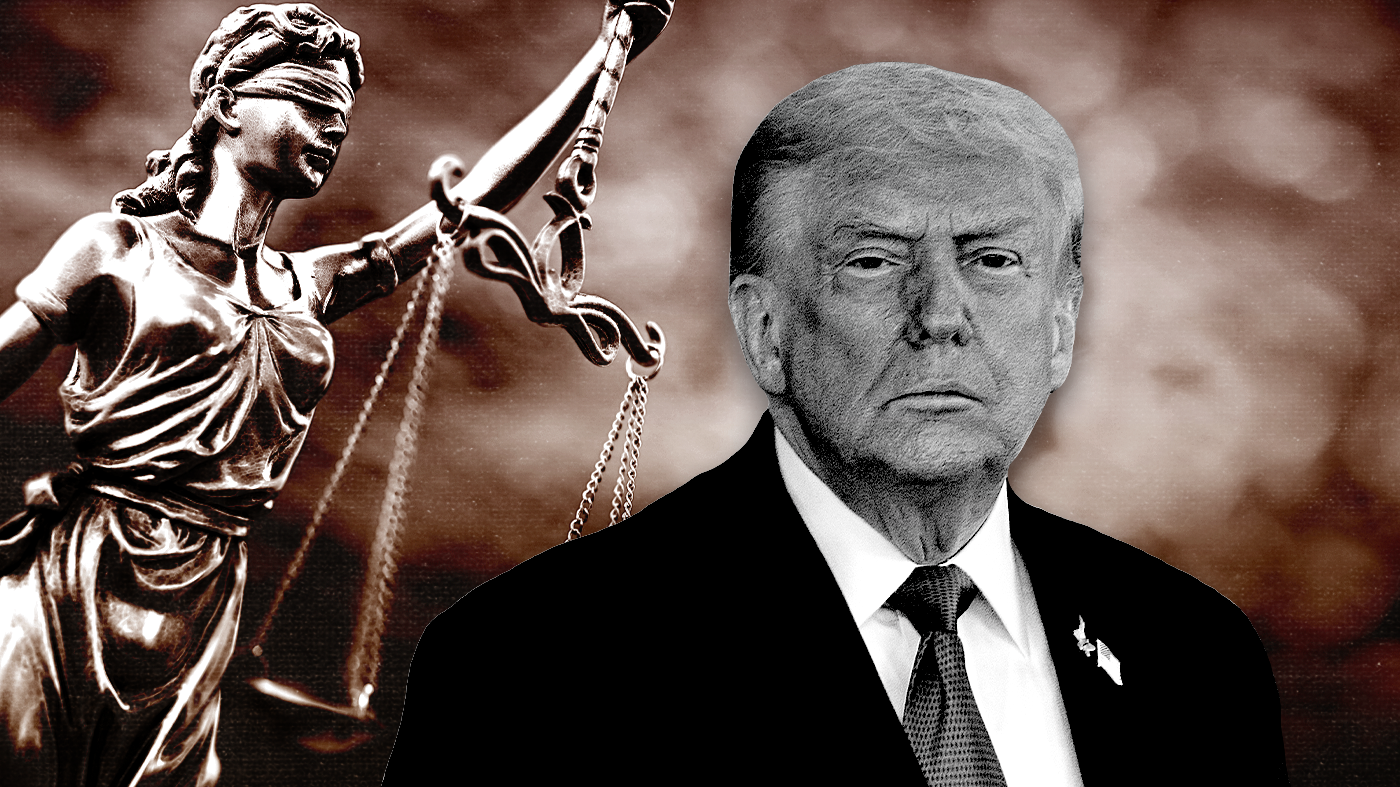
The Trump administration is staking out new ground in the fight to retain loyal U.S. attorneys after a string of setbacks, piling on pressure as top federal prosecutors stand firm in their roles and push forward with probes of the president’s political adversaries.
“UNITED WE STAND,” the office representing U.S. attorneys nationwide wrote Thursday on social platform X, sharing an image of President Trump and his prosecutors from an event last week.
Included in the picture: Four of five U.S. attorneys who judges found are unlawfully serving in their roles, including the prosecutor Trump tapped to pursue charges against two of his foremost foes.
Not included: Alina Habba, the fifth such U.S. attorney, who resigned from her role last month after a federal appeals court panel affirmed her disqualification as New Jersey’s top federal prosecutor.
But the Department of Justice (DOJ) this week reinvigorated its bid to bring her back.
In court filings Wednesday, DOJ lawyers asked the full U.S. Court of Appeals for the 3rd Circuit to reconsider the three-judge panel’s ruling, which upheld a lower court determination that Habba’s tenure turned unlawful when her 120-day interim term expired, despite the administration taking a “novel series of legal and personnel moves” to keep her in the job regardless.
The government called the panel’s “atextual limits” on acting U.S. attorneys a matter of “exceptional importance.” It also argued that, despite Habba’s resignation, the appeal of her disqualification is not moot, because if higher courts rule in her favor, she intends to return to the role.
Habba confirmed as much herself in a sworn declaration attached to the filing, signaling the fight could be destined for the Supreme Court.
The panel’s ruling has had ripple effects for Trump’s U.S. attorneys.
After Habba stepped down, and three prosecutors split up her duties, Delaware’s GOP chair-turned-top federal prosecutor announced her resignation, as well, citing the appeals court’s decision.
The ruling was also cited several times in a judge’s decision last week to disqualify John Sarcone III, acting U.S. attorney for the Northern District of New York, from two probes into state Attorney General Letitia James’s (D) office and quash related subpoenas.
Before the panel ruled, U.S. attorneys in Nevada, California and Virginia were also found to be unlawfully in their roles. However, those prosecutors have remained atop their offices.
In fact, some have doubled down.
Lindsey Halligan, the Eastern District of Virginia’s disputed top prosecutor, this week tore into a federal judge who questioned whether she’s entitled to continue calling herself the U.S. attorney after her installation was ruled unlawful, directing the prosecutor to explain why her representations weren’t “false or misleading” and shouldn’t yield discipline.
“The Court’s thinly veiled threat to use attorney discipline to cudgel the Executive Branch into conforming its legal position in all criminal prosecutions to the views of a single district judge is a gross abuse of power and an affront to the separation of powers,” wrote Halligan, who had no prosecutorial experience prior to taking the role.
The judge had not yet responded as of Friday.
The former White House aide’s disqualification resulted in the dismissals of criminal cases against James, the New York attorney general, and former FBI Director James Comey — two Trump opponents whom the president had urged his Justice Department to prosecute.
After twice failing to reindict James and with key evidence in Comey’s case tied up in a separate legal fight, the Justice Department appealed the dismissals and Halligan’s disqualification last month. Their cases will be heard by an appeals court panel together, with the DOJ’s opening brief due early next month.
At the event for U.S. attorneys, Trump reportedly chided his U.S. attorneys for failing to prosecute his opponents quickly enough.
The Wall Street Journal reported that he called the prosecutors weak and ineffective, suggesting they were making it difficult for Attorney General Pam Bondi and Deputy Attorney General Todd Blanche to do their jobs.
The reported exchange came just before federal prosecutors sent grand jury subpoenas to the Federal Reserve and threatened a criminal indictment over Chair Jerome Powell’s testimony to the Senate Banking Committee in June about the Fed’s ongoing $2.5 billion renovation of its Washington, D.C., headquarters.
Jeanine Pirro, the U.S. attorney for the District of Columbia, wrote on X that her office contacted the Fed on “multiple occasions” to discuss the renovations and Powell’s testimony but was “ignored.”
“The word ‘indictment’ has come out of Mr. Powell’s mouth, no one else’s,” Pirro said. “None of this would have happened if they had just responded to our outreach. This office makes decisions based on the merits, nothing more and nothing less.”
Pirro’s office also seems to be probing Democratic lawmakers who participated in a video calling on service members to reject unlawful orders. A spokesperson declined to “confirm or deny the existence of an investigation,” but five of the six lawmakers involved have said they’re targets.
It’s not clear what possible crime the Justice Department is investigating the lawmakers for potentially committing.
But Trump has alleged sedition, the rarely charged and serious accusation of rebelling against the U.S. government; right-wing extremist group leaders have faced the charge after plotting to keep him in power on Jan. 6, 2021.
According to the Journal, Trump raised specific issue with the sluggish pace of the DOJ’s investigation into Sen. Adam Schiff (D-Calif.) over allegations of mortgage fraud. The senator has denied wrongdoing and portrayed the probe as politically motivated.
The pressure from the top has trickled down, as well.
In Minnesota, six prosecutors — including the first assistant U.S. attorney — reportedly resigned amid a push to investigate the widow of Renee Good, the 37-year-old woman shot and killed by an Immigration and Customs Enforcement officer last week.
Top DOJ officials also reportedly resigned from the criminal section of the Civil Rights Division after the office’s head, Harmeet Dhillon, declined to investigate the shooting.
The DOJ alumni network Justice Connection estimates more than 230 career employees have been fired since Trump returned to the White House nearly a year ago and that more than 6,400 have left.