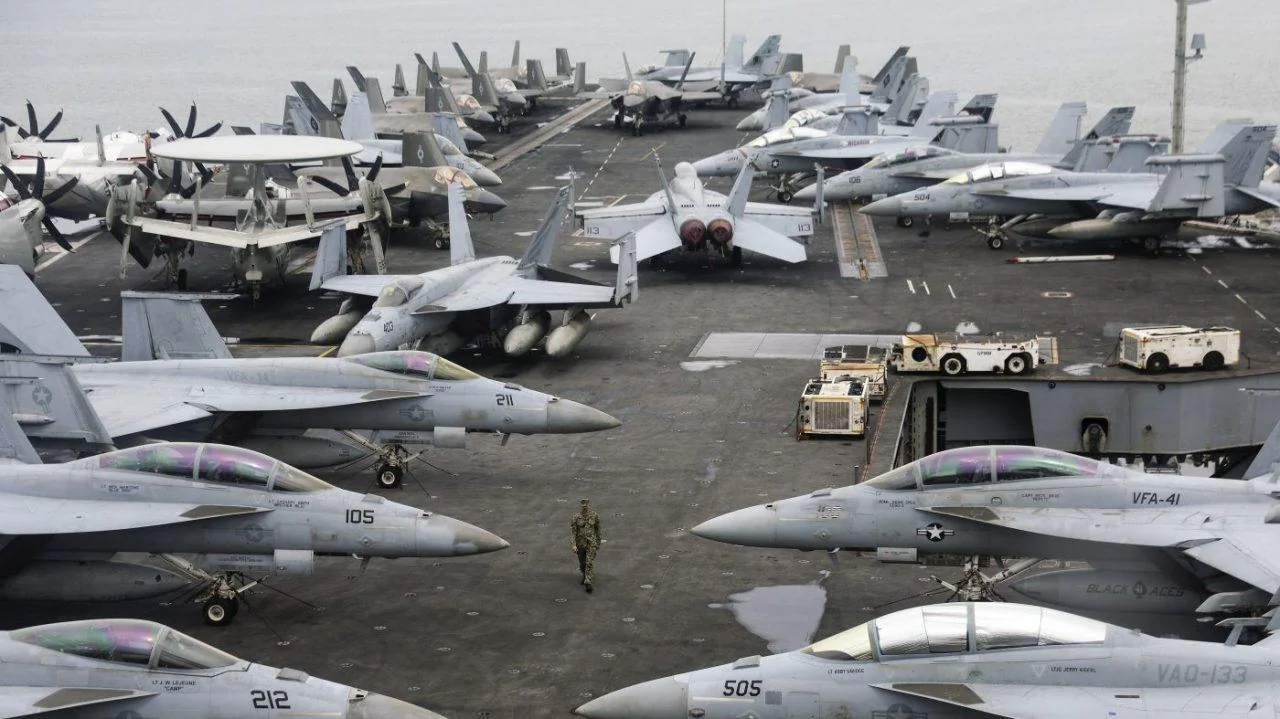
The Pentagon on Thursday said it is moving a carrier strike group from the South China Sea toward the Middle East as tensions between the U.S. and Iran continue to rise.
The USS Abraham Lincoln aircraft carrier and its strike group were spotted moving west away from the Indo-Pacific region, according to images from Copernicus, a satellite data company that monitors maritime traffic.
The movement of the carrier strike group — which includes fighter jets, guided missile destroyers and at least one attack submarine — is expected to take about a week, a source told NewsNation.
The Pentagon did not immediately respond to The Hill’s request for comment.
This movement comes as tensions between Washington and Tehran have spiked amid unrest in Iran over its economy and questions about whether President Trump will strike the country to aid mass protests challenging the autocratic regime.
Trump earlier this week encouraged Iranian protesters to continue pressuring the regime and vowed that “help is on the way,” signaling potential U.S. intervention. But Tehran has pushed back with its own threats.
The president so far has held off on any strikes in Iran, continuing to monitor the situation in the country. He was also advised that a large-scale strike against Iran was unlikely to topple the regime and could instead set off a wider conflict, The Wall Street Journal reported Thursday.
Advisers informed Trump that the U.S. military would need more troops and equipment in the Middle East to launch any large-scale strike while still protecting American forces in the region from potential retaliation, according to the Journal.
A senior U.S. official also told The New York Times that Trump is waiting to see Iran’s next move as he considers striking such targets as ballistic missile sites and Iran’s domestic security apparatus, and that any attack “is at least several days away.”
Protests have escalated in Iran since late December in response to declining economic conditions. It’s not clear exactly how many people have died in the protests because of the Iranian government’s internet blackout across the country, but the Human Rights Activists News Agency said more than 2,600 people have been killed and more than 184,000 have been detained.
Iran has largely been restricting information in and out of the country, and Wednesday it issued a “Notice to Air Missions,” or NOTAM, that flights in and out of Tehran have been restricted.
Iranian officials reportedly signaled Wednesday that trials and executions of protesters were planned, but Trump said he was told by “sources on the other side” that executions in Iran will stop.
But should the killings continue, “very strong action” could still be taken on Iran, the president warned.
The administration on Thursday also announced new sanctions against “the architects of the Iranian regime’s brutal crackdown on peaceful demonstrators” and the “shadow banking networks” alleged to be helping wealthy Iranians divert funds generated by the country’s natural resources.
The USS Abraham Lincoln has been deployed since late November, after it departed San Diego with no Pentagon announcement for where it would be sent.