Astronomers say they have identified a new type of astronomical object that challenges traditional ideas about how galaxies form.
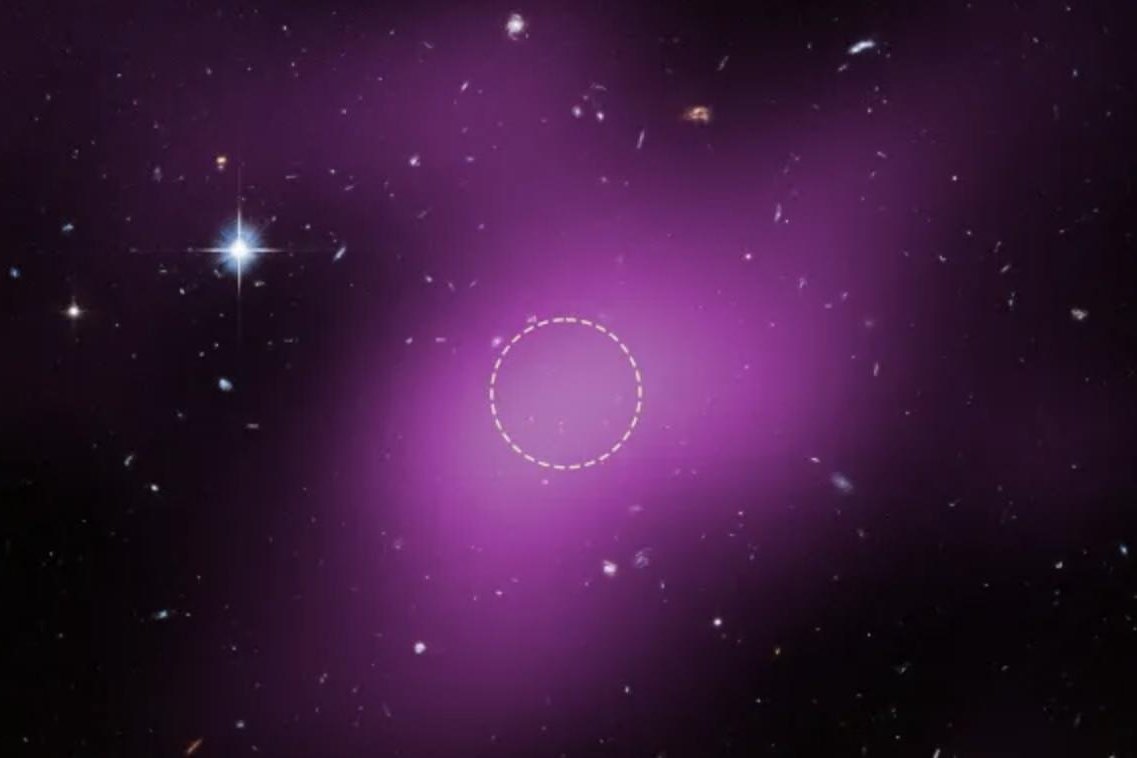
Using data from NASA’s Hubble Space Telescope, scientists studied a cloud of gas nicknamed Cloud-9. Located near the spiral galaxy Messier 94, about 14 million light-years from Earth, the object contains no stars, making it nearly invisible in optical light.
“This is a tale of a failed galaxy,” said principal investigator Alejandro Benitez-Llambay of the University of Milano-Bicocca. “The absence of stars is exactly what proves the theory right. It tells us that we have found a primordial object that hasn’t yet – or may never – lit up the cosmos with starlight.”
Hubble observations reveal a faint, ghostly concentration of gas. Astronomers say the cloud is also dominated by dark matter, an invisible substance that makes up much of the universe’s mass. Together, these characteristics provide strong evidence for an object long predicted by scientists known as a Reionization-Limited H I Cloud, or RELHIC.
According to NASA, in the early universe, some dark matter halos were able to gather gas but failed to trigger star formation. Those conditions left behind rare, starless relics that have remained largely undetected until now.
The discovery of Cloud-9 confirms a key prediction of cosmological models and offers a rare glimpse into how galaxies begin or, in this case, how they fail to begin, their lives.