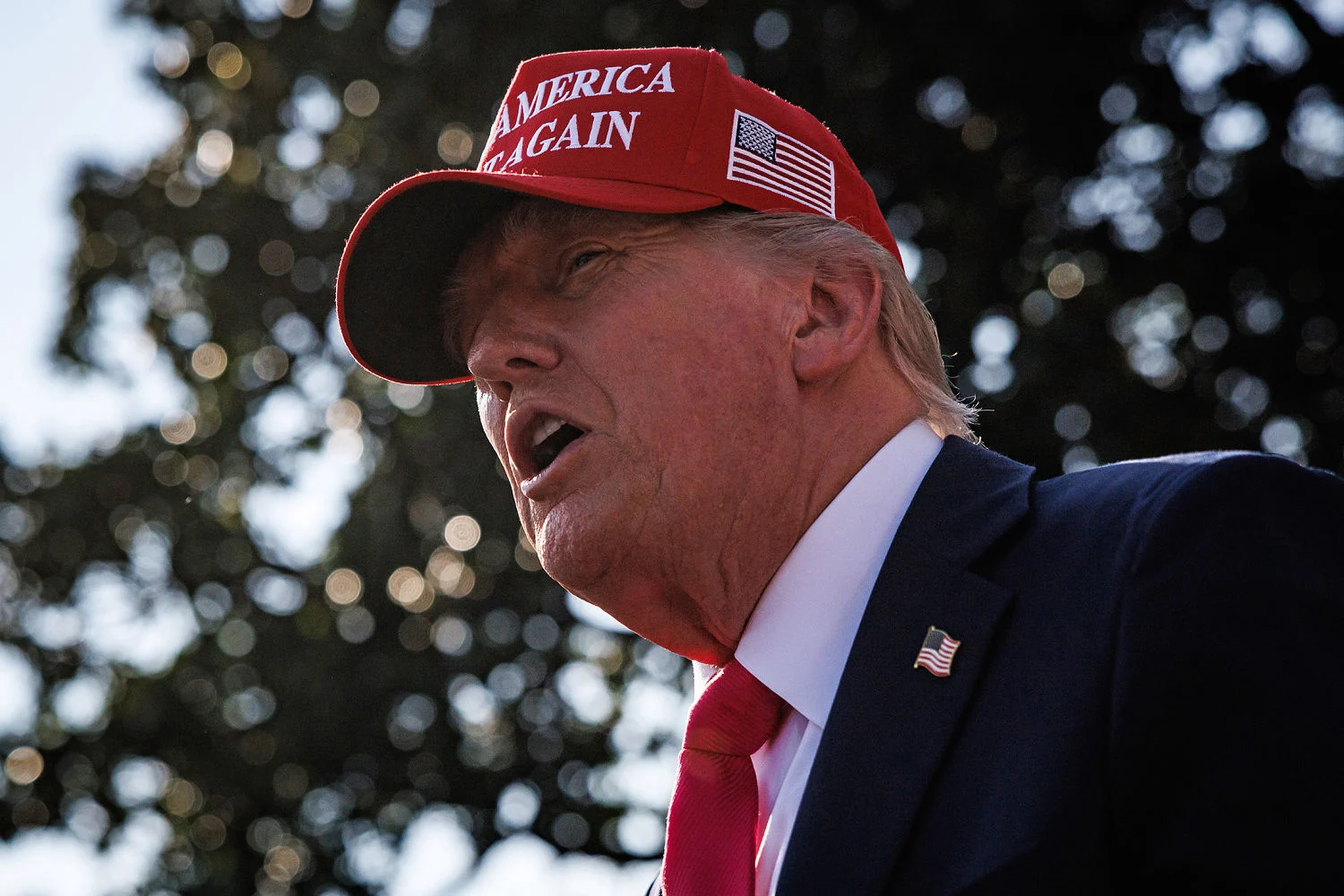
President Trump has picked a fight with allied MAGA conservatives on Capitol Hill by issuing an executive order to chill state efforts to regulate AI, a proposal similar to one that conservative critics of Big Tech defeated on Capitol Hill earlier this month.
Trump is trying to avoid an open fight with Republicans who want to rein in the titans of AI by reaching out to GOP lawmakers to make the argument that state regulation of the industry could cripple its growth.
But Republicans who warn that unregulated AI poses a serious threat to intellectual property, American jobs and children’s safety aren’t happy the president did an end-run around Congress — even if they’re holding back from criticizing the president directly.
“We’re all pretty much federalists; we believe in state rights. So, you want to make sure the states have authority to be able to regulate within their borders but … when you have interstate commerce with something like AI … you kind of need some sort of a federal framework, and I think that’s what the president and his team were recognizing,” Senate Majority Leader John Thune (R-S.D.) told reporters Monday.
Thune said he spoke with Trump and Republican colleagues on Capitol Hill who were “the strongest opponents” of intervening in state regulation of AI and “got them in a place where they’re comfortable.”
“I will continue to have some of those conversations, I’m sure, with my colleagues,” Thune added.
Trump told reporters in the Oval Office last week that he expects AI companies to invest trillions of dollars into the U.S. economy but warned that future growth could be severely limited if the industry has to grapple with a patchwork of state regulation.
“We have the big investment coming, but if they had to get 50 different approvals from 50 different states, you can forget it because it’s impossible to do,” the president warned.
His order gives Attorney General Pam Bondi broad power to sue states to overturn state-level laws that are “inconsistent” with the Trump administration’s policy to give AI free rein to develop and innovate and achieve U.S. “global AI dominance.”
The president gave his order teeth by including language that threatens to restrict states’ access to federal broadband funding if they enact what the administration determines to be “onerous AI laws.”
In a bid to appease conservative critics of big AI companies, Trump’s top AI adviser David Sacks has emphasized the administration won’t push back on state laws aimed at promoting the safety of children and adolescents.
“Kid safety, we’re going to protect. We’re not pushing back on that,” Sacks pledged last week.
Sen. Marsha Blackburn (R-Tenn.), an outspoken critic of what she sees as the threat AI poses to children, plans to make sure Trump’s executive order is implemented in a way to protect kids.
“Sen. Blackburn is leading the work on a federal framework that codifies the president’s executive order to protect children, creators, consumers, and conservatives without stifling AI innovation,” a spokesperson for Blackburn said.
Trump signed his executive order to upend states’ efforts to regulate AI after House Republicans failed to add a similar provision in the annual defense authorization bill that would have preempted state regulation of the industry; House GOP efforts to add a state AI regulation moratorium to the National Defense Authorization Act failed after Republican lawmakers balked at the provision.
Thune admitted earlier this month that the issue deeply divides Republicans in Congress.
“That’s controversial,” he said when some Republicans were trying to include a moratorium on state regulation in the defense bill. “The White House is working with senators and House members, for that matter, to try and come up with something that works but preserves states’ rights.”
An effort to add a similar provision on state regulation of AI to the One Big Beautiful Bill Act, which Republicans passed under the budget reconciliation process this summer, also failed.
Rep. Marjorie Taylor Greene (R-Ga.), who had been one of Trump’s biggest supporters in the House until they had a falling out over legislation to force the Justice Department to publicize all records related to Jeffrey Epstein, has been a vocal critic of restricting state regulation of AI.
Greene threatened to vote against the reconciliation package enacting much of Trump’s legislative agenda if it included a 10-year moratorium on state-based AI regulation.
“I will NOT vote for any bill that destroys states’ rights and lets AI run wild for the next 10 years. AI will replace jobs, especially in the press. This is not a left or right issue. It’s about humanity. I’ll go to the mat on this. If you kill federalism, I’m out,” she wrote on the social platform X in June.
Steve Bannon, Trump’s former political adviser, criticized the executive order for alienating the “MAGA base.”
“After two humiliating face plants on must-past legislation now we attempt an entirely unenforceable EO — tech bros doing upmost to turn POTUS MAGA base away from him while they line their pockets,” Bannon said in a statement, referring to failed efforts to limit state regulation.
Florida Gov. Ron DeSantis (R), who challenged Trump for the Republican nomination for president in 2024, argued his home state will still have power to regulate the AI industry under Trump’s order.
“First of all, an executive order can’t block states. You can preempt states under Article 1 powers through congressional legislation on certain issues, but you can’t do it through executive order,” DeSantis said Monday at Florida Atlantic University.
DeSantis argued that Trump’s order actually encourages states to take commonsense steps to protect the public from the new technology.
“If you read it, they actually say a lot of the stuff we’re talking about are things that they’re encouraging states to do,” he said. “So even reading it very broadly, I think the stuff we’re doing is going to be very consistent. But irrespective, clearly we have a right to do this.”
Some Republicans have applauded Trump’s executive order to protect the AI industry from state regulation, such as Senate Commerce Committee Chair Ted Cruz (R-Texas).
Cruz hailed Trump’s order as “an important step to promote American leadership in AI.”