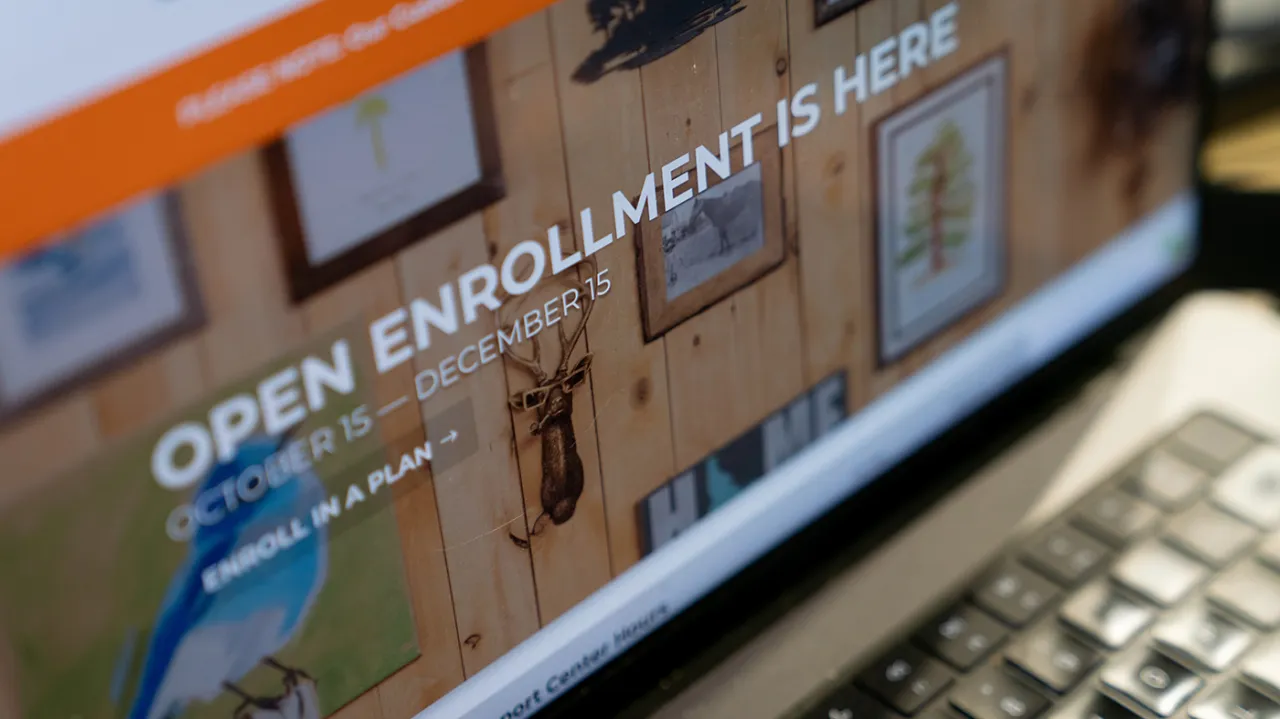
Florida will be hit harder than any other state if ObamaCare subsidies expire at the end of the year, which is looking increasingly likely as Republicans in Congress struggle to unite behind a plan to extend the tax credits.
More than 1.5 million Floridians could lose health care as monthly payments skyrocket. Average premium costs could shoot up by 132 percent, or by $521 annually, for Floridians who currently receive enhanced ObamaCare subsidies, according to the Center for American Progress.
Florida leads the country in the number of individuals enrolled in an Affordable Care Act (ACA) marketplace plan, with 1 out of 5 Floridians, or 4.7 million people, benefiting from subsidized health insurance, according to KFF, a nonprofit organization focused on health policy.
The Sunshine State’s relatively large number of small-business owners and hospitality workers account for the particularly high reliance on ACA plans, said Erica Li, a health policy analyst at Florida Policy Institute.
“We’re going to see, unfortunately, a rise in the amount of people who are uninsured. And that’s unfortunate, because even if a person is young and chooses to forgo health insurance because they may be healthier, you never know if you’ll have an accident or diagnosis that will require health care coverage and continual care,” Li said.
The rising costs could also be front of mind for voters heading into next year’s midterms, though Susan MacManus, political analyst at the University of South Florida, said it’s too soon to say whether Democrats can gain an advantage in the increasingly red state.
“The bottom line is that we don’t know how it’ll play out, because we don’t know what the Florida Legislature might do to affect health care costs. There are some proposals and bills that are on the table. They haven’t really been publicized much yet, so we don’t know exact details, a lot of moving pieces here, but without question, people are very worried about it,” MacManus said.
“You can’t predict from one week to the next what’s going to dominate people’s thinking. And right now, the first thing on people’s minds is something that’s going to cost them more,” she added.
Gallup polling last week showed that across the country, ACA approval hit a new high of 57 percent, up from 54 percent in November 2024.
Carlos Otero, a 60-year-old Miami resident, is among the millions of Floridians bracing for rising health insurance costs. He used to own a small consumer research consulting firm, but was hit hard by cuts to the U.S. Agency for International Development earlier this year and has since turned to gig work to pay the bills.
Unless Congress acts before Jan. 1, his premium of $20 for him and his husband through AmeriHealth is set to jump to $200. Otero said he plans on switching to a lower-cost plan that will also cover less.
“For a household that is living from paycheck to paycheck [needing] to pay $200 [for health care coverage] will be $200 less for food, applications that I need to find [a] job or for [the] internet. [These] are vital,” Otero said.
“We need to cover the basics, and having affordable care helps a lot,” he added.
Florida is also among a handful of states that declined to expand Medicaid coverage during the Biden administration, further compounding concerns over health insurance costs.
Eric Johnson, a Florida-based Democratic strategist, said the issue will have particular resonance with voters given a broader anxiety over affordability.
“This is going to have hit them at a time that’s already hard, and I think Republicans and the administration will take a great deal of blame for that, and it is an issue Democrats will do very good to communicate,” Johnson said.
Last month, Tony Fabrizio, a top pollster for President Trump, said one way for Republicans to steer conversations away from expiring subsidies would be to focus on reducing drug prices, given Trump’s recent deals with drug companies.
Johnson said voters want to see action on drug prices and health insurance costs.
“It’s certainly smart for them to be talking about drug prices as an issue, but people don’t see it as an either or. People see it as, ‘Yes, we need that fixed too,’” he said.
Otero comes from a family of Cuban Americans who overwhelmingly voted for Trump. He sees his family members changing their tune because of concerns stemming from health care affordability.
“I am seeing right now more and more relatives that are very red, very Republican, considering changing. I have an aunt that became a citizen, and she voted for Trump, and now she called him ‘El Loco,’” Otero said, which means “The Madman.” “Now, she sees there are a lot of problems with health care as well, because one of my cousins has a brain tumor that has been controlled [and] is being treated.”
“For them, affordable care is important, and they have been having issues too. So now it’s real.”
Florida ranks third in the nation for percentage of uninsured residents, topped only by Texas and Oklahoma, according to a Miami University report.
Florida Policy Institute projects that rate could increase by 6 percentage points in 2026, from almost 11 percent to almost 17 percent, which would leave between 1.1 million and 1.9 million additional Floridians being priced out of receiving health care coverage.
Public health and policy experts point out that the pain will not only be political.
Aside from hurting the pockets of millions of Floridians, the state could lose $5.5 billion of its gross domestic product and nearly 50,000 jobs, according to the Commonwealth Fund.
Hospitals in Florida could also see an influx of uninsured people utilizing emergency services, which could put more strain on an already overwhelmed health care system, said Mary Mayhew, president of the Florida Hospital Association.
Scott Darius, executive director of Florida Voices for Health, said people are overlooking the impact the coming ObamaCare storm will have on people who have insurance through employers or other programs.
“We missed the lesson that we’re all really dependent on each other, especially in terms of public health,” he said.
“My big fear when you have this many more uninsured people introduced into the population [is] more disease and untreated conditions that continue to proliferate, but then you also have less money in the system to really bolster those points of care,” he added.