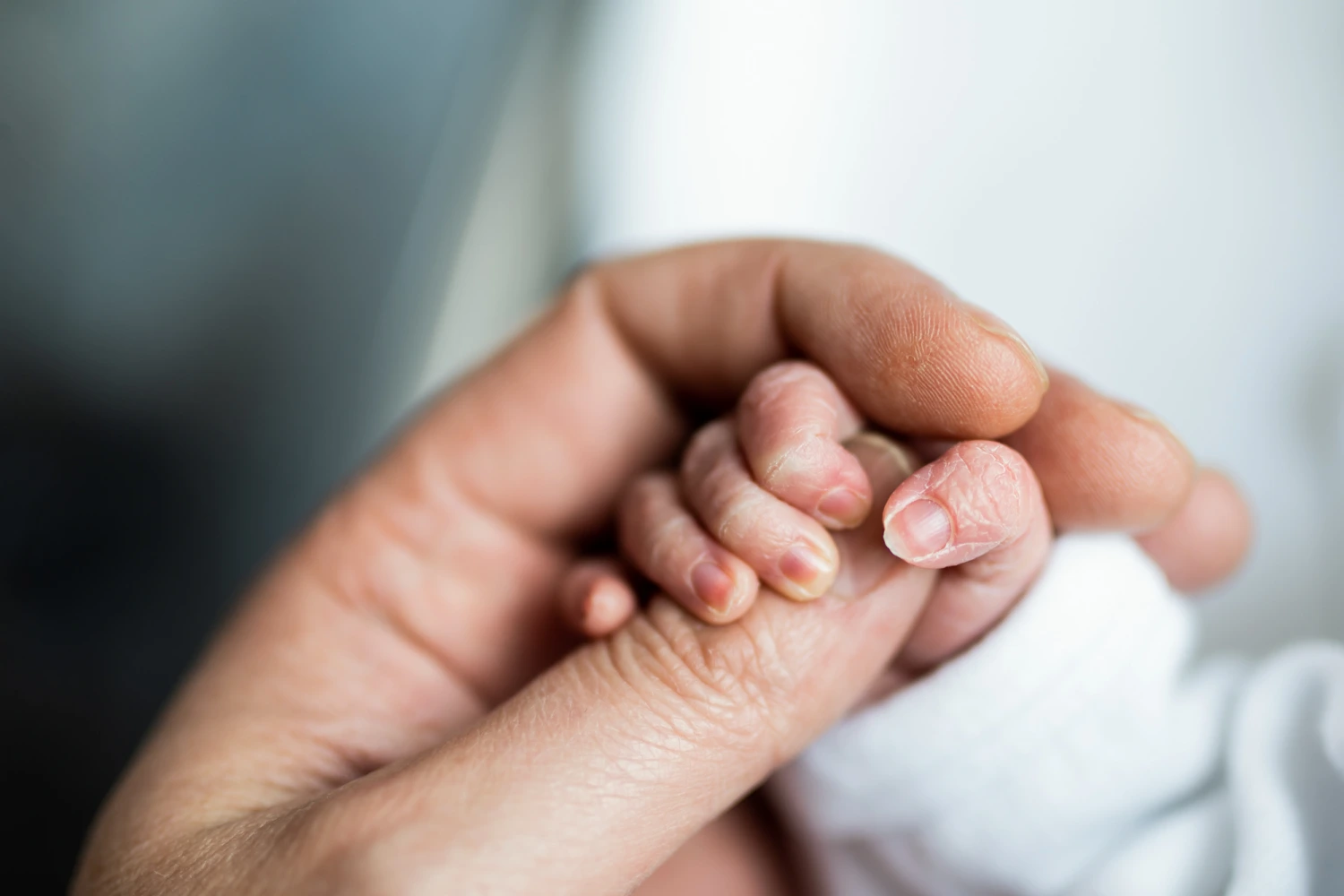
Doctors, hospitals and public health departments are scrambling to ensure proper care for pregnant women and their babies following a controversial vote from Centers for Disease Control and Prevention advisers that reversed decades of standard medical practice giving newborns the hepatitis B vaccine.
“We don’t really know just yet how individual hospitals and clinicians will handle this,” said Dr. Brenna Hughes, interim chair of the department of obstetrics and gynecology at Duke University in Durham, North Carolina. “It’s creating fear and distrust.”
Last Friday, the CDC’s vaccine panel advised that only babies born to women who test positive for hepatitis B should get the first dose within 24 hours of delivery. The decision rolled back decades-long guidance that all newborns should be protected against the lifelong, incurable infection that can lead to liver disease and cancer.
Many babies in the U.S., however, are born to women who never have the chance to be tested.
A March of Dimes report published in November found that nearly a quarter of pregnant women aren’t under a doctor’s care during their first trimester, when most women are tested for hepatitis B.
Dr. Steven Fleishman, president of the American College of Obstetricians and Gynecologists, said the hepatitis B vaccine given to newborns acts as a safety net.
“If there is someone who gets exposed to hepatitis B later in pregnancy, or develops an infection later on,” Fleishman said, “the baby is protected by that vaccine.” The virus can pass from mom to baby during delivery.
As of Tuesday, acting CDC director Jim O’Neill hadn’t yet signed off on the committee’s recommendation. The agency isn’t required to follow the panel’s advice, but usually does.
The CDC doesn’t mandate vaccination. It recommends a schedule for children to be protected against infectious diseases. The vaccine panel regularly reviews data and makes changes to the schedule based on guidance by doctors or scientists with expertise in the subject matter.
But experts said the advisory panel, stacked with members handpicked in June by Health Sec. Robert F. Kennedy Jr., failed to provide the kind of scientific evidence historically associated with the CDC to back up its reasoning.
The group “has not followed the standard and transparent process that had made the advisory committee a bastion of good evidence-based decision making,” said Dr. Jason Goldman, an internal medicine doctor and president of the American College of Physicians. “Their information and decisions cannot be trusted.”
The panel recommended that women who test negative for hepatitis B can decide in consultation with a health care provider whether their baby should get the birth dose.
The panel’s vote to hold off the hepatitis B vaccine for babies until at least 2 months of age for the first dose if the vaccine is not given at birth was totally out of line with decades of evidence proving the shot’s safety and effectiveness, experts say. The birth dose, implemented for all babies in the early 1990s, has driven down cases of acute hepatitis B infections in children by 99%.
During a call with reporters Tuesday, Dr. Aaron Milstone, a pediatrician at Johns Hopkins Medicine and member of the American Academy of Pediatrics’ committee on infectious diseases, said the fallout is “chaos and confusion” among public health experts trying to counsel clinicians on best practices, as well as doctors in exam rooms faced with worried parents.
“Many physicians are working across our country in fear that doing the best thing for their patient is now at odds with information coming from what were previously trusted resources,” Dr. Sarah Nosal, president of the American Academy of Family Physicians, said during the same call.
“If you have to spend 20 minutes explaining that vaccines, yes, in fact, are safe,” said Dr. Kevin Schulman, professor of medicine at Stanford Medicine, “then we’re not spending 20 minutes making sure the baby’s on the growth curve, that you’re wearing seat belts, that you’re using car seats appropriately.”
Dr. Anna Lok, director of clinical hepatology and assistant dean for clinical research at the University of Michigan Medical School, said the change in guidance adds barriers for parents, especially in a chaotic delivery room.
“It’s just telling the parents, we’re going to make you climb to Mount Everest in order to get your baby vaccinated,” Lok said. “Because every single step, every hurdle, is just making sure that something that should be done, doesn’t get done.”
Dr. Rashmi Roa, an OB-GYN who specializes in high-risk pregnancies at UCLA Health, said nothing has changed from a medical standpoint. “Our recommendations will stay the same.”
Some states are bypassing federal recommendations and instead joining forces to establish their own guidance. Dr. Naima Joseph, an OB-GYN at Beth Israel Deaconess Medical Center in Boston, said that health officials in Massachusetts and other states have formed the Northeast Public Health Collaborative.
“We have already made recommendations regarding universal birth dose hepatitis B vaccine that continues to ensure access” to newborns, she said.
The measured approach isn’t expected nationwide, said Joe Zamboni, a lawyer for the nonprofit American Families for Vaccines. “I think some states will probably do it better than others,” he said.
One state that worries public health experts is Florida. The state’s surgeon general, Joseph Ladapo, said in September that Florida is working to eliminate all vaccine requirements for children to attend school.
The Florida Department of Health has scheduled a meeting for this Friday, Dec. 12, to discuss those requirements. A department spokeswoman told NBC News via email that the meeting will be held in Panama City and will not be available to the public online.