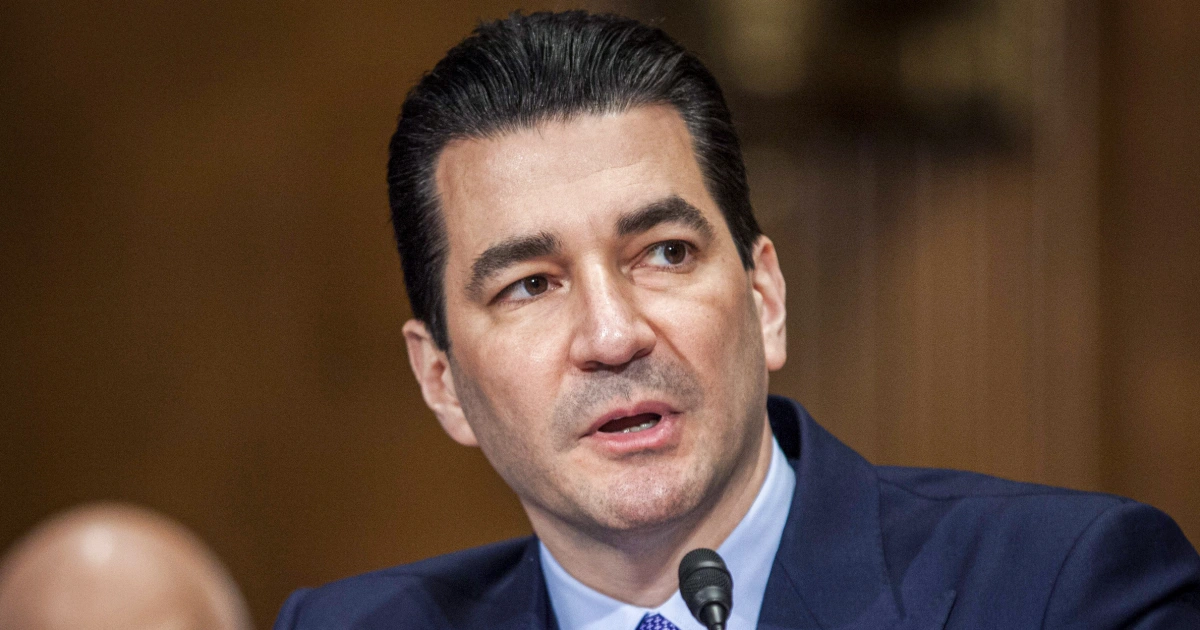
Former Food and Drug Administration (FDA) Commissioner Scott Gottlieb said Sunday that President Trump’s assertions about hepatitis B transmission are “simply not true.”
Trump said earlier this week that the disease is “mostly” transmitted sexually or via dirty needles.
“That’s the problem. That’s simply not true,” Gottlieb told host Margaret Brennan on CBS News’s “Face the Nation.” “The fact is, there’s a refrain that if you just test the moms while they’re pregnant, you can detect whether they have hepatitis B, and if they have hepatitis B, you continue to give that birth dose.”
“But the reality is, many moms don’t get tested, even though they intend to, many times, those test results aren’t checked, and the tests themselves have a false negative rate, meaning they’re going to say you don’t have hepatitis B, when in fact, you do, of about 2 percent.”
On Friday, the president praised the Centers for Disease Control and Prevention’s (CDC) vaccine advisory panel for changing its guidance on hepatitis B vaccinations, calling it a “very good decision” on his Truth Social platform.
The Advisory Committee on Immunization Practices (ACIP) voted 8-3 in favor of lifting its recommendation that newborns receive the hepatitis B vaccine at birth earlier Friday. Acting CDC Director Jim O’Neill must endorse the new guidelines, which now call for infants whose mothers test positive for hepatitis B to be vaccinated.
Health and Human Services Secretary Robert F. Kennedy Jr. dismissed the entire panel over the summer and handpicked new appointees.
Gottlieb said Sunday that the new members of the panel “were put there to carry out a specific agenda” on behalf of Kennedy, which will damage the group’s credibility going forward.
“I think in time, ACIP is going to be fully degraded as a decisionmaking body, and it’s going to be more symbolic,” the former FDA head added. “There will be certain states that adhere to it, but it will be more symbolic.”
Hepatitis B is primarily spread when blood, semen or other bodily fluids from a person with the disease enters the body of someone who is not infected, according to the CDC.
The agency also notes that infants born to people with hepatitis B and those who were not vaccinated as infants and whose parents were born in countries with high rates of the disease are at a higher risk for the disease.