Summary
- Supreme Court has a muscular 6-3 conservative majority
- Landmark law was passed in 1965 during civil rights era
- Having gutted one provision, court targets a second
- Trump administration backed Voting Rights Act challenge
WASHINGTON, Oct 18 (Reuters) – The Voting Rights Act, a landmark law barring discrimination in voting, was a product of the U.S. civil rights era, sought by Nobel Peace Prize recipient Martin Luther King, passed by Congress and signed by Democratic President Lyndon Johnson in 1965.
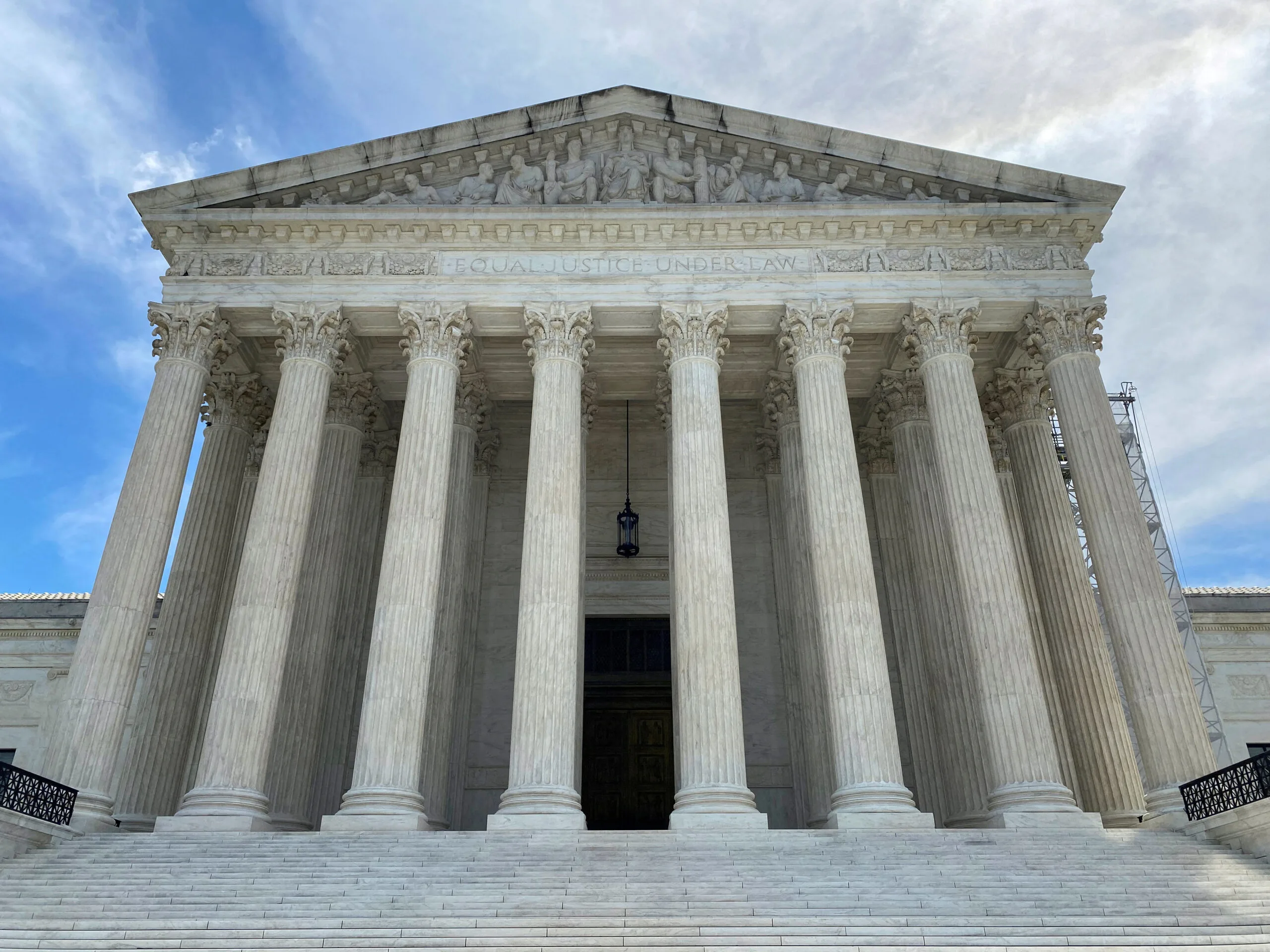
Six decades later, it faces its greatest threat, with the U.S. Supreme Court, which has a 6-3 conservative majority, looking poised to hollow out one key section after gutting a different one in 2013.
The court is expected to rule in the coming months in a case argued on Wednesday concerning a map delineating U.S. House of Representatives districts in Louisiana. The conservative justices signaled they could undercut the law’s Section 2, which bars voting maps that would result in diluting the voting power of minorities, even without direct proof of racist intent.
In doing so, the court would not be striking down the Voting Rights Act. But the question is what will be left of the law after the court issues its decision.
“If the court further weakens Section 2, states and localities, including those with long histories of discrimination, could be free to draw maps that systematically silence Black, Latino, Native and Asian American voters,” said Sarah Brannon, deputy director of the American Civil Liberties Union’s Voting Rights Project.
Black people make up about a third of the population in Louisiana, and white people make up a majority. The state has six U.S. House districts. Louisiana’s Republican-led legislature added a second Black-majority district in response to a judge’s ruling that an earlier map it had approved containing just one Black-majority district likely harmed Black voters in violation of Section 2.
A group of white voters sued to block the map. They argued that the map was guided too heavily by race in violation of constitutional provisions promising equal protection under the law and that the right to vote cannot be denied on the basis of race. Those provisions were ratified to safeguard the rights of Black Americans following the Civil War of 1861-1865 that ended the practice of slavery in Southern states including Louisiana.
President Donald Trump‘s administration sided with the white voters. It stopped short of calling for invalidating Section 2. But it proposed a framework for cases involving Section 2 that would clamp down on “excessive consideration of race” and give states more leeway to accomplish “race-neutral principles,” such as protecting lawmakers already serving in Congress.
Justice Department lawyer Hashim Mooppan told the justices that “under the Constitution, the problem is not the mere consideration of race in districting. The problem is when race subordinates traditional neutral principles and is the factor that cannot be compromised.”
The framework that Mooppan promoted would supplant a test set by the Supreme Court in a 1986 case called Thornburg v. Gingles for determining when an electoral map has sufficiently diminished minority voting power to be deemed unlawful.
“The reason why Section 2, as it’s being construed in Gingles, is a problem is it’s saying that you have to create a district for Black Democrats that you would never create for white Democrats in a Republican state,” Mooppan said.
The Justice Department’s approach would “effectively gut” Section 2, according to George Washington University law professor Spencer Overton.
“If adopted, Section 2 cases would still exist on paper but would be nearly impossible to win,” Overton said. “Courts could dismiss claims before trial, giving state legislatures free rein to entrench their power and sideline voters of color.”
In a process called redistricting, the boundaries of legislative districts across the United States are reconfigured every decade to reflect population changes as measured by the national census. Redistricting typically is carried out by state legislatures.
The Trump administration’s framework would impose new evidentiary requirements on Black voters who sue over how electoral maps are drawn. Among other things, they would need current statistics showing that a legislature discriminated based on race, rather than party affiliation.
In the United States, where more than 80 percent of Black voters back Democratic candidates, decoupling race and party affiliation in such a way is difficult.
The Justice Department’s approach “would make it extremely difficult for Section 2 plaintiffs to win in jurisdictions where you have intense polarization, like you do in the Deep South,” said Travis Crum, a law professor at Washington University in St. Louis.