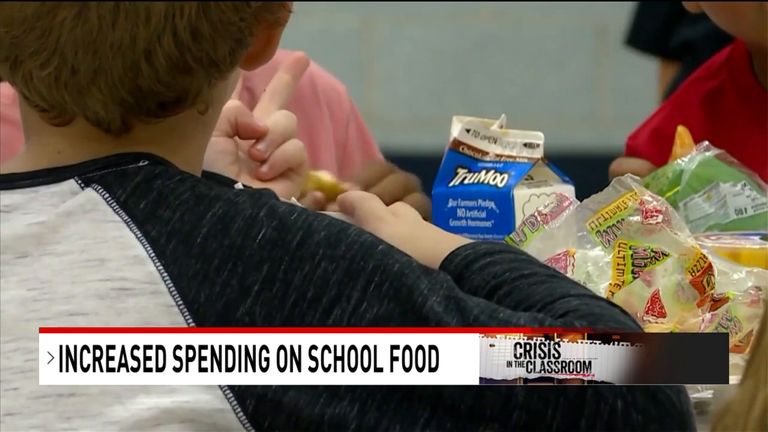
Between the end of pandemic-related school aid and the sharp increase in food costs, schools and families are getting squeezed in yet another area: school meals.
This school year, the median cost for breakfast is $1.73 at an elementary school, $1.75 at a middle school and $1.80 at a high school, according to the School Nutrition Association. For lunch, it is $2.75 for an elementary school and $3 for a middle or high school, up from pre-pandemic levels. For a family with three school-aged kids, the prices quickly add up – to more than $67 a week.
And that’s for meals that were free for the last few years, paid for via federal waivers that made breakfast and lunch free to all students regardless of family income. Those waivers ended at the end of the last school year and the costs of school meals in most states reverted back to prices set by individual districts, unless students qualified for free or reduced-priced meals based on family income. Before the pandemic, nearly 22 million students were served free or reduced-price lunches a day, according to federal data.
The latest data from the Consumer Price Index shows a dramatic annual increase in the cost of food at elementary and secondary school: 305% for families from a year ago for what are often the most healthy meals children have, a recent study found. Increased food costs are helping drive the increases. The cost of eggs is up nearly 60% from a year ago; bread and lunch meats are both up more than 15%; milk and cheese, up more than 12%.
In its latest survey, released in January, the School Nutrition Association found 60.5% of school meal program directors said they had increased prices for meals for the current school year.
Association President Lori Adkins warned school meal programs are “at a tipping point as rising costs, persistent supply chain issues and labor shortages jeopardize their long-term sustainability.”
Of the 1,230 school meal program directors nationwide who participated, the survey found 99.8% said increased costs was the top challenge – and 88.5% said those costs are a significant challenge.
“It’s not only inflation that is increasing the cost of preparing meals, it’s also supply chain disruptions and labor shortages,” said Diane Pratt-Heavner from the School Nutrition Association.
At the Prince William County Public Schools, Virginia’s second-largest school district, they have seen the all three challenges at play over the past few years coming through the pandemic. During the first year of the pandemic, when meals were free, it served 22 million meals. The district served about 15 million meals a year before the pandemic.
“In a program where our financials are very tight as it is, it’s getting even tighter, and more challenging quite frankly, to ensure quality meals are being served,” said program director Adam Russo.
Schools struggle to provide meals for kids as inflation sends food costs soaring