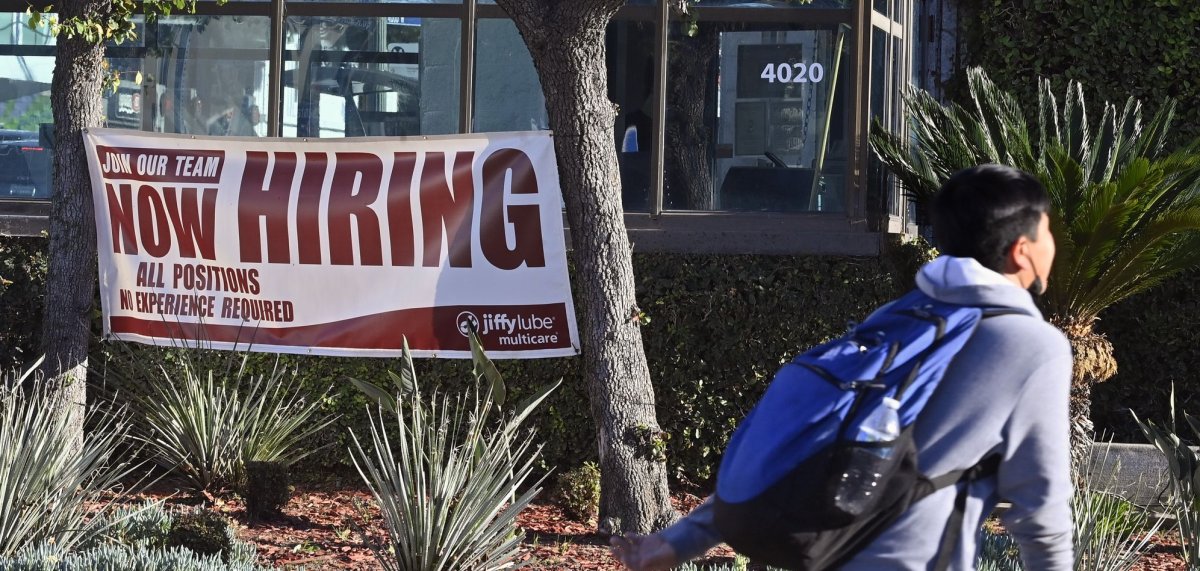
A jobs report set to be released on Friday will provide the latest gauge of U.S. economic health as President Donald Trump’s tariffs reshape the nation’s trade relationships.
The fresh hiring data arrives days after a government report showed better-than-expected economic growth. U.S. GDP increased at a 3% annualized rate over three months ending in June, the report said.
The robust reading suggested the economy has continued to avert a significant tariff-induced cooldown. A one-off statistical quirk tied to a drop-off of imports appeared to partially account for the surge, however.
Economists expect the U.S. to have added 100,000 jobs in July, which would mark a solid gain but a slowdown from 147,000 jobs added in the previous month. The anticipated performance would come in below a monthly average of 130,000 jobs added so far this year.
Key measures of the economy have proven resilient in recent months, defying fears of resurgent inflation and a possible economic downturn. Hiring has kept up a solid, albeit slower pace, humming along with less disruption than some economists anticipated. Inflation has increased for two consecutive months but it remains well below a peak attained in June 2022.
The job report arrives days after the Federal Reserve opted to hold interest rates steady at its July meeting.
Five meetings and seven months have elapsed since the Fed last adjusted interest rates. The federal funds rate stands between 4.25% and 4.5%, preserving much of a sharp increase imposed in response to a pandemic-era bout of inflation.
In theory, robust economic growth eases pressure on the Fed to lower interest rates, since consumers and businesses appear undeterred by high borrowing costs. A meaningful slowdown in the labor market, meanwhile, could prompt the Fed to grant greater consideration to a potential rate cut.
President Donald Trump has repeatedly urged the central bank to lower interest rates, saying the policy would boost economic performance and reduce interest payments on government debt.
Fed Chair Jerome Powell, by contrast, has voiced some concern about a rekindling of inflation due to elevated tariffs. Importers typically pass along a share of the higher tax burden in the form of price hikes.
Speaking at a press conference in Washington, D.C., on Wednesday, Powell said tariffs had begun to contribute to price increases for some goods but the ultimate impact of the policy remains uncertain.
“Higher tariffs have begun to show through more clearly into prices of some goods but their overall effects on inflation and the economy remain to be seen,” Powell said. “Their effects on inflation could prove to be short-lived, but it is possible the inflation effects could be more persistent.”
He added, “We’ll do what we need to do to keep inflation under control.”