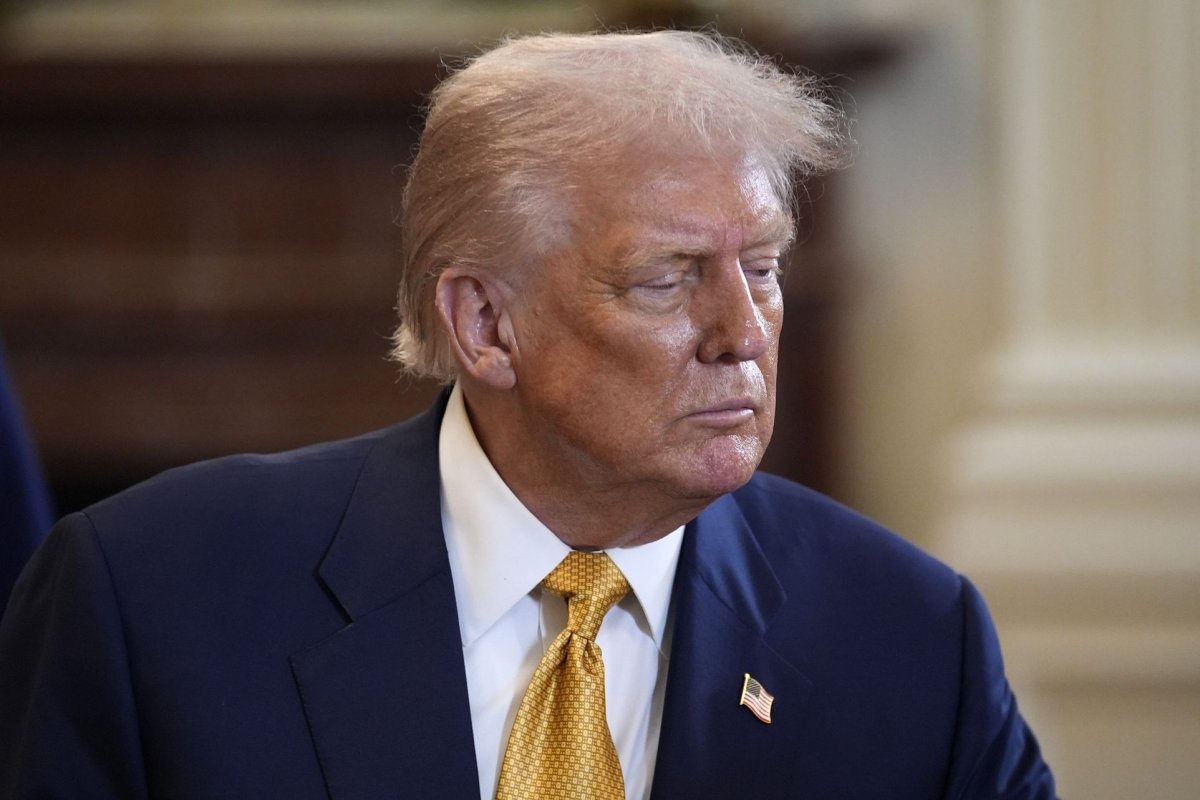
July 24 (UPI) — A divided federal appeals court has ruled that President Donald Trump‘s executive order ending birthright citizenship is unconstitutional.
The U.S. Court of Appeals for the Ninth Circuit issued its 2-1 ruling Wednesday. Though already blocked by the courts, Wednesday’s ruling marks the first time an appellate court has judged the merit’s of Trump’s executive order.
“We conclude that the Executive Order is invalid because it contradicts the plain language of the 14th Amendment’s grant of citizenship to “all persons born in the United States and subject to the jurisdiction thereof,” the three-judge panel said in its ruling.
Judge Patrick Bumatay, a Trump appointee, dissented, stating the states lacked standing to bring the challenge.
Trump issued his executive order among his first actions after being inaugurated as the 47th president of the United States on Jan. 20. It has since been met with challenges in court in lawsuits filed by both states and civil rights organizations.
The 14th Amendment was ratified in 1868 following the Civil War to grant citizenship to people who were born in the United States, including children of formerly enslaved Black people.
The Trump administration argues that the 14th Amendment should be narrowly interpreted so that birthright citizenship is not granted to children if their parents are undocumented or if their parents’ presence was lawful but temporary, such as those on work or student visas, at the time of birth.
Trump, who campaigned on leading an anti-immigration administration, had vowed during his campaign to end birthright citizenship, despite legal experts questioning his ability to do so.
The Democratic-led states countered that denying citizenship to children born here is unconstitutional, and that if his executive order was allowed to stand newborns would lose their ability to participate in American society.
Washington State, Oregon, Arizona and Illinois filed their challenge to the executive order on Jan. 21. They were awarded an injunction in the case in early February.
And late last month, in a win for Trump in the case, the conservative-dominated Supreme Court ruled along ideological lines 6-3 in a case that consolidated the plaintiffs from three separate litigations that judges could not issue nationwide injunctions against the president, but allowed those in class-action lawsuits. The ruling also ordered the district courts to re-examine the injunctions.
A federal judge in New Hampshire then granted a class-action status to the lawsuit and enforced a preliminary injunction against Trump’s order.
“The court agrees that the president cannot redefine what it means to be American with the stroke of a pen,” Washington Attorney General Nick Brown said in a statement Wednesday. “He cannot strip away the rights, liberties and protections of children born in our country.”