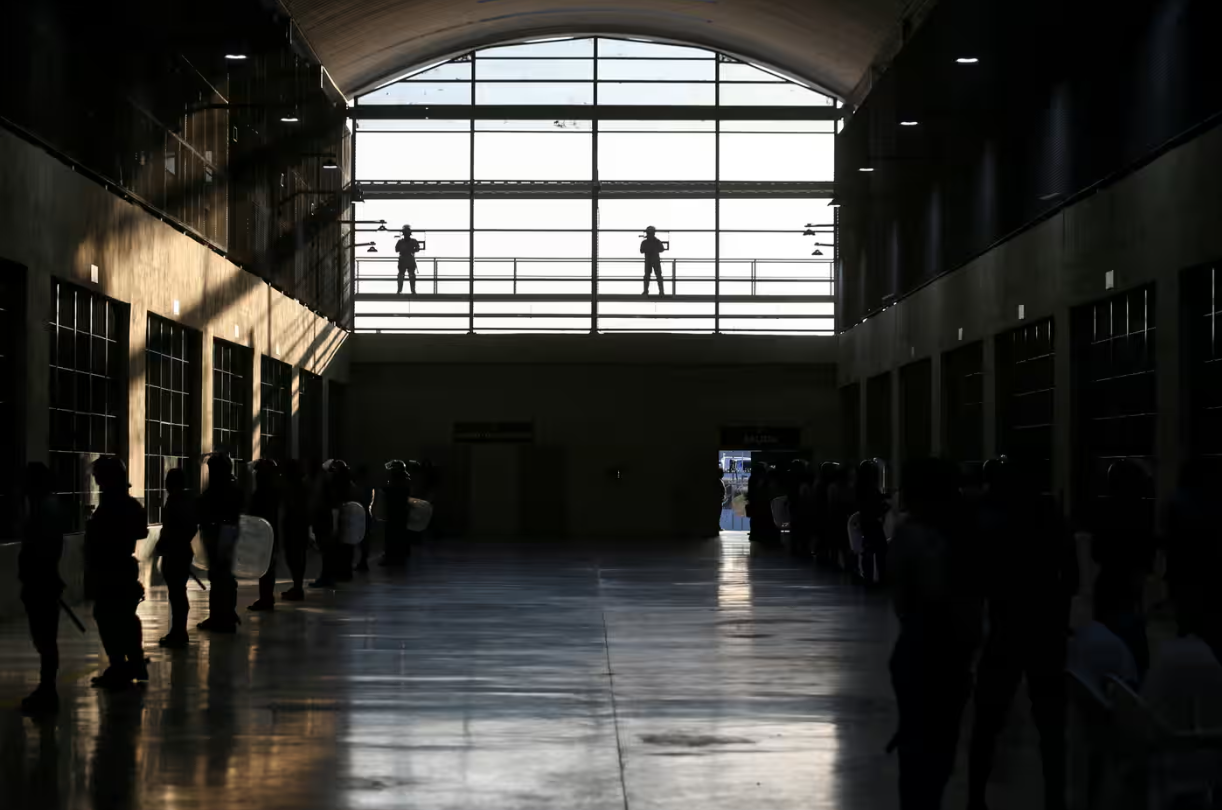
At least 50 Venezuelan men sent by the Trump administration to a prison in El Salvador had entered the United States legally, according to a review by the Cato Institute, a libertarian thinktank.
The report, published today, analyzed available immigration data for only a portion of the men who were deported, and focuses on the cases where records could be found.
“The government calls them all ‘illegal aliens.’ But of the 90 cases where the method of crossing is known, 50 men report that they came legally to the United States, with advanced US government permission, at an official border crossing point,” Cato said in its report.
This number aligns with broader trends among Venezuelan migrants, many of whom entered the country either as refugees or through a Biden-era parole program that granted two-year work permits to those with US-based sponsors.
“The proportion isn’t what matters the most: the astounding absolute numbers are,” reads the report. “Dozens of legal immigrants were stripped of their status and imprisoned in El Salvador.”
Cato’s analysis goes against the Trump administration’s justification for sending the men to El Salvador, saying that only undocumented immigrants were deported.
The report says that 21 men were admitted after presenting themselves at a port of entry, 24 were granted parole, four were resettled as refugees, and one entered the US on a tourist visa.
To date, the Trump administration has not released complete records for the more than 200 Venezuelans transferred to El Salvador. Cato’s review includes information for 174 men whose cases have some degree of public documentation.
The Trump administration has accused many of the deported Venezuelan men of gang involvement, but in many cases, those claims appear to hinge largely on their tattoos.
Many of the tattoos cited as evidence have no connection to gang activity. The markings reflect, in many cases, personal or cultural references.
Cato uses the example of Andry José Hernández Romero, a makeup artist, who has crown tattoos on his arms that reference the Three Kings Day celebrations in his Venezuelan hometown.