Apharmaceutical lobbying group that donated $1 million to President Donald Trump‘s inaugural fund has come out against his new executive order aimed at lowering drug prices.
Newsweek reached out to the White House for comment via email.
Why It Matters
Americans often pay more for prescription drugs than consumers in other countries, which has fueled calls for lawmakers to pass legislation that would allow for the federal government to negotiate lower prices.
Trump and others have argued it’s unfair that Americans would pay higher prices for the same drugs,
but critics have argued this will stifle innovation at pharmaceutical companies.
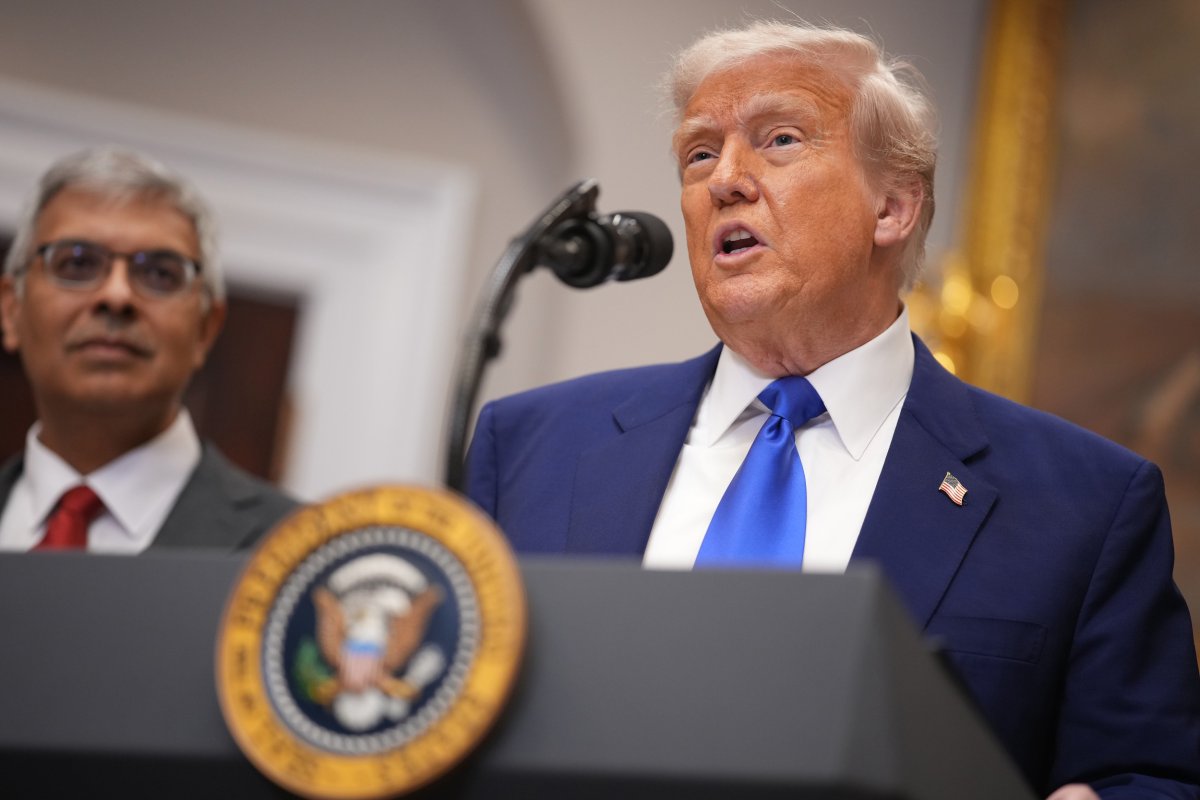
The executive order will require pharmaceutical manufacturers to move toward lowering prices or face a potential “rulemaking plan to impose most-favored-nation pricing” from Health and Human Services Secretary Robert F. Kennedy Jr.
It could even order medications to be imported from “developed countries” where necessary, on a case-by-case basis.
The Pharmaceutical Research and Manufacturers of America (PhRMA) wrote in statement Monday that the Trump administration is “right to use trade negotiations to force foreign governments to pay their fair share for medicines,”
However, it criticized Trump’s order for trying to set American drug costs at the same prices as those on other developed nations, and instead attempted to blame those countries for “not paying their fair share and middlemen driving up prices for U.S. patients.”
“U.S. patients should not foot the bill for global innovation,” the statement added. “Importing foreign prices from socialist countries would be a bad deal for American patients and workers. It would mean less treatments and cures and would jeopardize the hundreds of billions our member companies are planning to invest in America – threatening jobs, hurting our economy and making us more reliant on China for innovative medicines.”
Studies have found that drug prices in places like Europe are much cheaper than the U.S. because countries’ national health authorities are able to negotiate better new drug prices with manufacturers due to their size and reach, rather than individual insurance companies.
PhRMA donated $1 million to Trump’s 2025 inaugural fund but did not give to his campaign, according to OpenSecrets. It is registered with the Federal Election Commission (FEC) as a “Trade Association PAC.”
FEC data reviewed by Newsweek suggests the group didn’t donate to Trump or his Save America PAC in the 2024 election. It did, however, donate to a mix of Democratic and Republican House and Senate candidates.
Former federal prosecutor Neama Rahmani told Newsweek he believes the industry will challenge the executive order in court.
“There are billions of dollars at stake. The legal question is does the order exceed statutory authority, or more specifically, did Congress authorize the President to unilaterally impose prescription drug prices?” he said.
Data from Peterson-Kaiser Family Foundation revealed the differing costs of five popular prescription drugs—Eliquis, Jardiance, Entresto, Januvia and Ozempic—between the U.S., U.K., Canada, France and Japan. The data shows U.S. costs being significantly higher than the other countries for the same drugs.
What People Are Saying
Trump wrote on Truth Social: “Starting today, the United States will no longer subsidize the healthcare of foreign countries—and we’ll no longer tolerate profiteering and price gouging from Big Pharma.”
Senator Bernie Sanders, a Vermont independent who caucuses with Democrats, wrote in a statement: “As Trump well knows, his executive order will be thrown out by the courts. If Trump is serious about making real change rather than just issuing a press release, he will support legislation I will soon be introducing to make sure we pay no more for prescription drugs than people in other major countries.”
Cenk Uygur, co-founder of The Young Turks, wrote on X: “If Trump cuts prescription drug prices by 30-80%, I will give him all the credit in the world. And I won’t care if anyone on the left cries about it. But he has to actually do it! Don’t give him credit until it’s done! He loves to make promises for marketing and then not do them.”
Merck told Newsweek, “We agree with the U.S. government’s assessment that innovative medicines are undervalued by many countries around the world. In the U.S., different actors along the supply chain are responsible for most of the cost of medicines for patients. Today’s Executive Order contemplates a new direct-to-consumer program that will be discussed with companies in the coming days. There is not an immediate impact on Merck in the near-term. We will be monitoring closely as the program and policies on this issue develop.”
Eli Lilly told Newsweek, “Lilly agrees with the policy objective expressed in the Executive Order that research costs for breakthrough medicines should be shared more fairly across developed countries. However, an MFN approach is not the answer to help patient affordability. Instead, lower prices for U.S. consumers can only happen if intermediaries take less for themselves. For Lilly, more than 60% of the cost of a medicine goes to middlemen. We look forward to working with the Administration to fix this broken system and bring lower prices directly to consumers.”
What Happens Next
Drug companies have 30 days to comply with the order or face the administration’s “rulemaking plan,” unless the order is blocked in court.